June 7, 2026

How to get your deposit back
Nothing eases the pains of moving like a fully refunded security deposit. Make sure you get your cash back with these expert tips.
Struggling to find the perfect home? Explore Movely services that can help you!
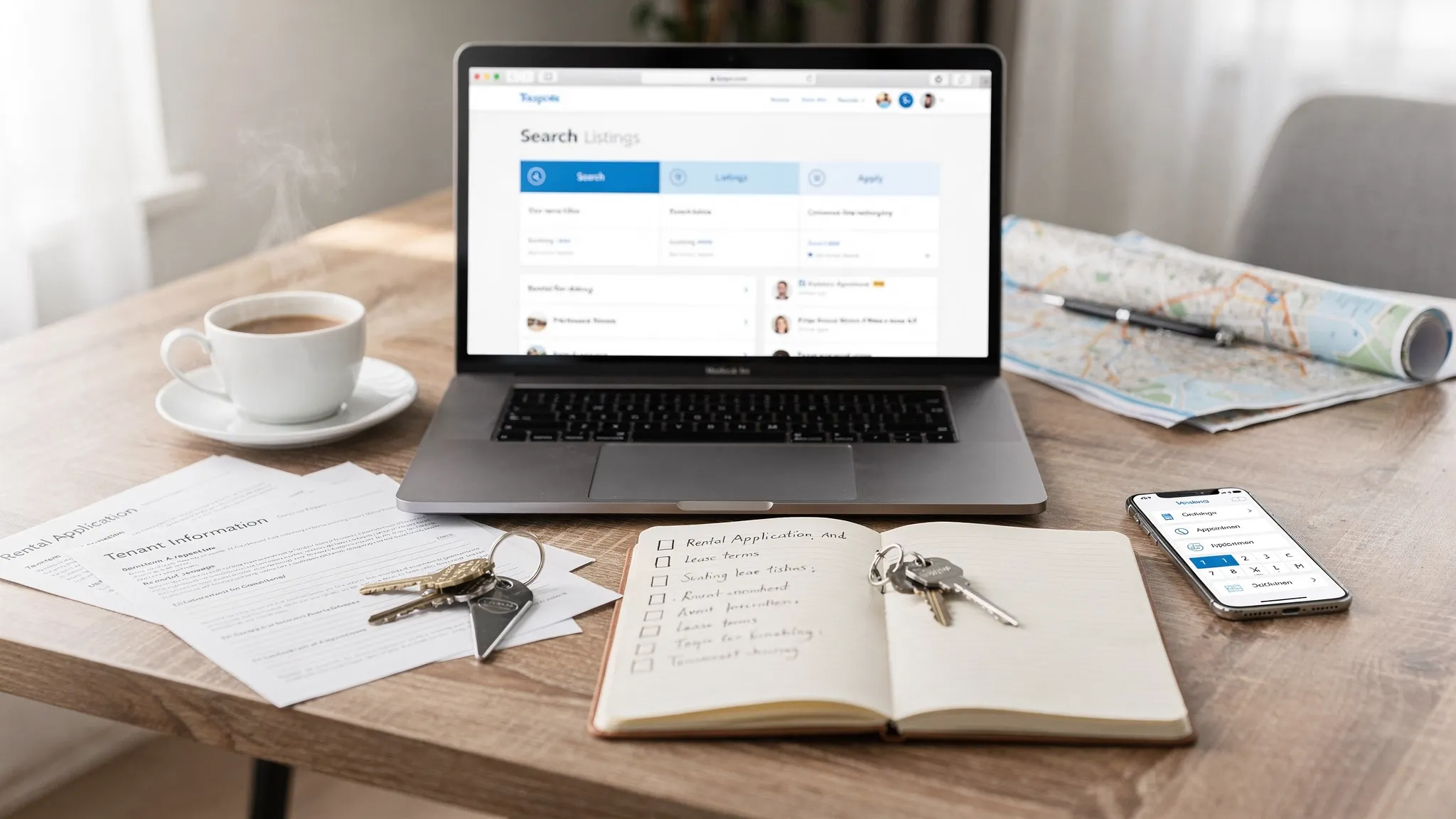
The fastest way to search apartments for rent is not to refresh listings all day. It is to run the same focused routine every day, at the same time, with a clear decision rule.
That matters because rental markets reward speed, but they also punish panic. If you answer too slowly, good listings disappear. If you move too quickly, you can waste money on bad-fit apartments, weak applications, or scams. A 20-minute daily routine gives you the best of both worlds: enough speed to compete, enough structure to stay safe.
This routine is built for busy renters, expats, remote apartment hunters, and anyone relocating to a new city who cannot spend hours chasing listings. Use it once per day during a normal search, then twice per day if your target market is highly competitive or your move-in deadline is close.
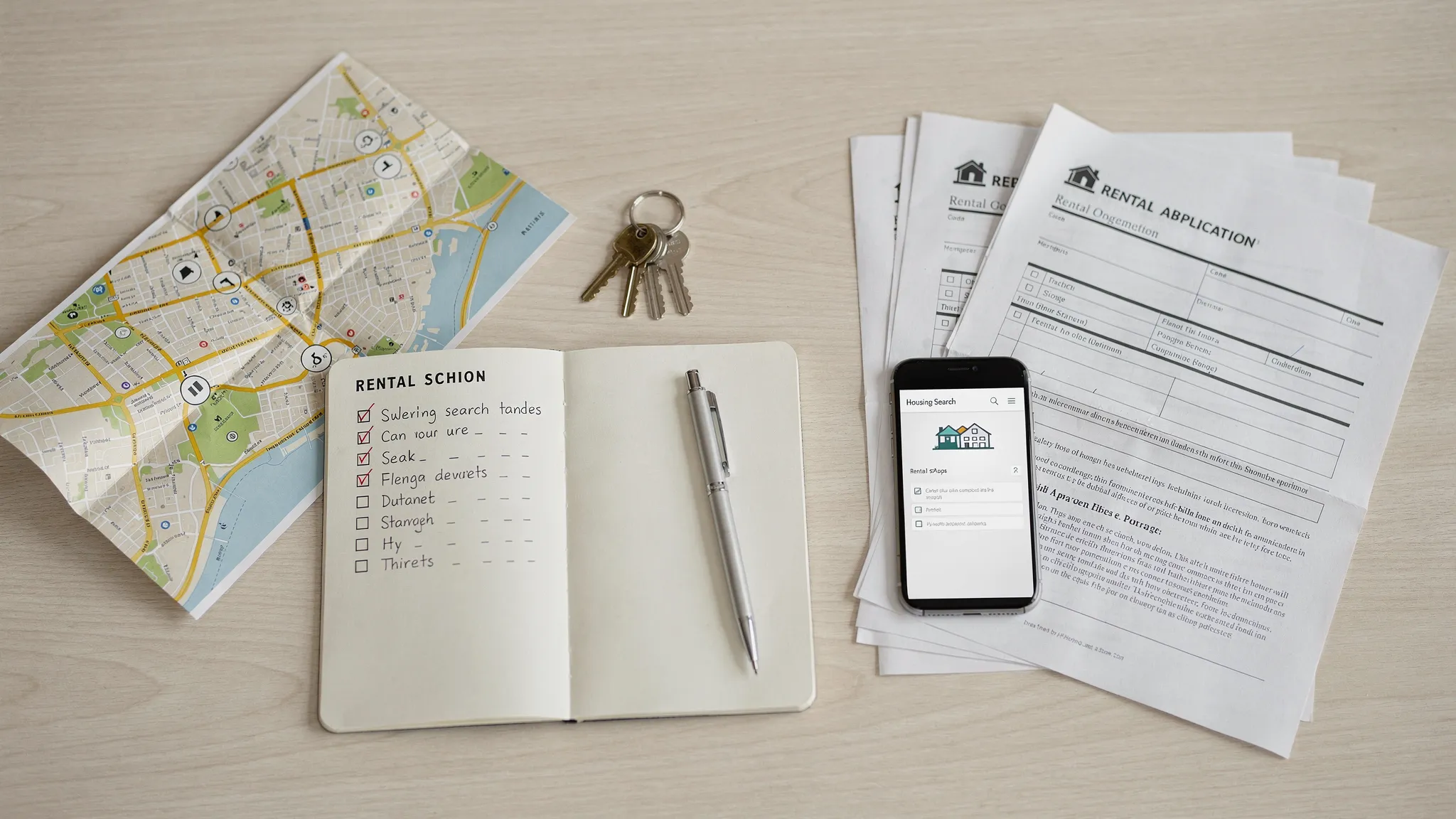
Apartment searching feels overwhelming because most renters treat every listing as a new decision. They open too many websites, compare too many neighborhoods, rewrite messages from scratch, and forget where each lead stands.
A routine fixes that by turning the search into a pipeline. Every day, you only need to answer five questions:
If you are still setting up your search stack, start with a small number of trusted sources instead of trying every website at once. Movely’s guide to apartments for rent websites explains which channels are usually worth your time and which ones tend to create noise.
The 20-minute routine only works if you prepare a few things once. Do this before you begin your daily search, ideally in one focused 45 to 60 minute session.
First, define your search boundaries. Your maximum rent should not be only the advertised rent. It should include utilities, building fees, parking, internet, commuting costs, renter’s insurance, deposits, and any setup costs. If your apartment choice depends on driving, include the cost of mobility in your decision. For example, if you are relocating to a city where owning a car may be necessary, checking local vehicle prices on an online marketplace like Hooter can help you decide whether a cheaper apartment farther from transit is truly cheaper.
Second, prepare your renter packet. Landlords respond faster when they can quickly verify who you are, how you will pay, and why you are a low-risk tenant. Your packet might include ID, proof of income, employment confirmation, references, a short cover note, and any local documents required in your destination country. If you need a stronger application, use this guide on building the tenant packet that gets you callbacks.
Third, create a simple tracker. You do not need complicated software. A note, spreadsheet, or task board is enough. Track the listing link, address or area, rent, move-in date, contact name, status, next action, and red flags. The goal is to avoid asking, “Did I already message this one?”
Finally, save your searches and alerts. Your filters should match your real life, not your fantasy apartment. If you are unsure how tight to make them, read Movely’s guide to rental search filters that save you hours.
Set a timer. The time limit matters. It forces you to make quick, consistent decisions instead of drifting into endless browsing.
Open your tracker before you open any rental website. This keeps you focused on your actual criteria.
Remind yourself of your non-negotiables: budget ceiling, move-in date, minimum bedrooms, commute limit, pet rules, accessibility needs, furnished or unfurnished preference, and lease length. If you are moving abroad, also include document requirements, registration rules, and whether you can attend viewings in person.
This two-minute reset prevents one of the most common rental search mistakes: slowly expanding your search until every apartment looks “maybe okay.” If a listing fails a true non-negotiable, skip it immediately.
Now open your saved searches. Sort by newest first. Do not start with listings you saw yesterday unless you are checking for price changes or availability updates.
During this scan, you are not choosing an apartment. You are only deciding whether a listing deserves more attention. Use a quick pass-fail screen:
If a listing is interesting but incomplete, save it only if the missing information can be answered quickly. For example, “utilities not stated” can be a question. “No photos, no address, no landlord identity, and urgent payment requested” is not a lead, it is a risk.
Pick the best two or three listings from your scan. Spend a few minutes checking whether they are plausible.
Look for rent that is far below market, photos that appear reused, addresses that do not match the building type, and descriptions that feel generic or inconsistent. Be extra careful with listings that ask for money before a viewing, push you to move communication off-platform immediately, or claim the owner is abroad and cannot show the unit.
For international moves, verification matters even more. A live video viewing, supervised in-person viewing, agent credential check, and written payment sequence can reduce risk. If anything feels off, pause and compare it with Movely’s guide on how to avoid rental scams when moving to a new country.
Your goal in this step is not to investigate forever. It is to avoid sending your documents or money into a situation that already has obvious warning signs.
Most renters send messages that are too vague. “Is this available?” is easy to ignore, especially in competitive markets. Your message should make the landlord’s next step obvious.
Use a short, specific message like this:
Hello, I’m interested in the apartment at [address/listing name]. I’m looking for a long-term rental from [date], and the rent and location fit my search. I can provide proof of income, ID, and references. Is it still available, and would it be possible to arrange a viewing or video viewing this week? Thank you.
If you are an expat or relocating, add one sentence that reduces uncertainty:
I’m relocating for [work/study/family] and can share a complete application packet in one PDF.
If you have a pet, no local credit history, or a guarantor, mention it briefly only if it is relevant to the landlord’s screening. Do not overexplain in the first message. The purpose is to get a response, not to write your full life story.
After sending inquiries, update your tracker immediately. Mark each lead as “messaged,” “viewing requested,” “needs document,” “follow-up,” “rejected,” or “scam risk.”
Then spend the remaining time following up on older leads. A polite follow-up after 24 to 48 hours is reasonable if the listing is still active and you have not received a reply.
Try this:
Hello, I’m following up on my message about [apartment/listing]. I’m still interested and can send my application documents quickly if the apartment is available. Please let me know if viewings are being scheduled. Thank you.
Do not chase endlessly. If you have followed up once or twice and there is no reply, move on. A silent landlord is usually not your best path to a secure lease.
End every session with one clear next action. This keeps the search moving even when the day feels unproductive.
Your next action might be scheduling a viewing, sending a document packet, asking a lease question, comparing two neighborhoods, requesting a video tour, or removing weak leads from your tracker.
If you are close to applying, prepare your viewing checklist before the appointment. Movely’s apartment viewing checklist can help you inspect the unit quickly without missing major issues.
The daily routine handles fresh opportunities. A weekly rhythm improves the system behind it.
Choose one theme for each weekday:
This rhythm keeps you from doing everything every day. It also helps you notice patterns. If one neighborhood produces great apartments but impossible commutes, stop pretending it is a finalist. If one portal creates only stale listings, downgrade it. If landlords keep asking for a document you do not have, prepare an alternative before the next inquiry.
In a fast rental market, 20 minutes once per day may not be enough. The solution is not to search for five hours. It is to run two short sessions.
Do one scan in the morning and one in the late afternoon or evening. Keep the same structure, but shorten each session to 10 or 15 minutes. Freshness matters because many landlords prioritize early, complete, low-friction applicants.
You should also tighten your application process. Have your renter packet ready in a single PDF or secure folder. Write your message templates in advance. Decide your maximum rent and acceptable concessions before viewings. If you wait until after you fall in love with an apartment to calculate your budget, you are more likely to overpay or miss the deadline.
For a broader system, Movely’s guide to finding an apartment faster pairs well with this daily routine.
Searching from abroad adds friction. You may be in a different time zone, lack local credit history, speak a different language, or be unable to attend viewings. The routine still works, but the verification and communication steps become more important.
Use local search terms, not only English ones. In many countries, the best listings are written in the local language. Save searches using neighborhood names, common property terms, and lease-type terms. If you do not speak the language, use short translated messages, but avoid sending unclear or overly automated text.
Time your inquiries to local business hours. A message sent at 3 a.m. local time may be buried by morning. If possible, send messages when agents and landlords are likely to respond.
Ask for a live video viewing rather than relying only on recorded clips. During the video, request that the person shows the entrance, building common areas, windows, appliances, water pressure, heating or cooling units, and the street view. If the person refuses any real-time verification, treat that as a warning sign.
Most importantly, do not send large payments before you have verified the property, the person receiving payment, and the contract terms. Remote renting can work, but it should be a controlled process, not a leap of faith. For more detail, read Movely’s guide to remote apartment hunting.
If you follow the routine for a week and nothing happens, do not assume the market is impossible. Look at your numbers.
Track these simple metrics:
Each number points to a different fix. If you have very few matching listings, your filters may be too narrow or your budget may not match the market. If you send many inquiries but get few responses, your message or renter packet may need work. If you get viewings but no approvals, your application may not be strong enough. If you keep losing apartments after viewings, you may need to decide faster or prepare documents earlier.
A healthy search does not mean every message gets a reply. It means you can see where the bottleneck is and improve that part of the system.
The routine is simple, but a few habits can break it.
The first mistake is searching without a budget ceiling. If you keep clicking apartments above your real budget, you train yourself to dislike the listings you can actually afford.
The second mistake is using too many channels. More websites can mean more opportunities, but they can also mean duplicates, stale listings, and scams. Start with a focused stack, then expand only if your lead volume is too low.
The third mistake is applying before verification. Speed is important, but it should never replace basic safety checks. A real landlord or agent should be able to explain the process, show the property, provide written terms, and use traceable payment methods.
The fourth mistake is failing to adapt. If your search has produced no serious leads after seven days, something must change: location, budget, timing, documents, message quality, or support level.
The fifth mistake is treating every apartment equally. Your goal is not to inspect the whole market. Your goal is to find a safe, suitable rental that fits your life and that you can actually secure.
Use this version when you sit down to search:
If you can repeat this every day for two weeks, you will have a clearer, faster, and less stressful search than most renters.
Is 20 minutes a day really enough to search apartments for rent? It can be enough if you have clear filters, saved alerts, a ready renter packet, and a tracker. In very competitive markets, run the routine twice per day rather than extending one session for hours.
What time of day is best to search for apartments? The best time is when fresh listings appear in your target market and when landlords or agents are likely to respond. For many renters, morning plus late afternoon works well. If you are abroad, align your search with local business hours in the destination city.
How many apartments should I inquire about each day? Focus on quality. Two or three strong, verified leads are better than ten vague inquiries to listings that do not fit. If you are getting no responses, improve your first message and application packet before increasing volume.
Should I apply before viewing an apartment? In some competitive markets, pre-application is common, but you should avoid sending sensitive documents or money without verifying the listing, landlord or agent, and process. For remote searches, request a live video viewing or supervised viewing whenever possible.
What should I do if I keep losing apartments to other applicants? Shorten your response time, prepare your documents in advance, write a stronger inquiry, and review whether your budget or criteria match the market. If you are relocating internationally, tenant-side support can help reduce delays and uncertainty.
A daily routine helps you stay organized, but relocating across borders can still be difficult when you are dealing with unfamiliar platforms, language barriers, viewings, documents, and lease terms.
Movely helps tenants search and secure long-term housing abroad with AI-powered and manual property search, local agents, supervised viewings, multilingual support, tenant portfolio improvement, contract legal review, off-market property access, moving and cleaning add-ons, transfer support, and post move-in assistance across 30+ countries.
If you want to search faster without taking unnecessary risks, start with a structured plan and get support where the process is hardest: finding real listings, verifying properties, presenting your application, and reviewing the contract before you sign.