June 7, 2026

How to get your deposit back
Nothing eases the pains of moving like a fully refunded security deposit. Make sure you get your cash back with these expert tips.
Struggling to find the perfect home? Explore Movely services that can help you!

When you’re trying to find rental homes in a competitive market, most “no response” outcomes are not really rejections. They are triage.
Landlords and agents skim dozens of inquiries, then prioritize the few that feel low-risk, easy to verify, and ready to move forward today. Your job is to make it effortless for them to pick you.
That is exactly what a tenant packet does.
In 2026, many long-term rental markets are still moving fast. A typical listing can attract a flood of messages within hours, and most are incomplete or vague. When your message lands, the decision-maker is usually asking:
If the answers are not obvious within a quick scan, you often fall behind applicants who made the “yes” path simpler.
A tenant packet (also called a renter packet or application dossier) is a single, organized set of documents and a short cover note that proves you are a strong, low-friction candidate.
Think of it as doing the landlord’s due diligence for them, before they even ask.
It works especially well for:
Movely touches on the broader approval workflow in its long-term rental approval checklist, but this guide goes deep on the packet itself and how to structure it specifically to get callbacks.
If you want the full end-to-end flow, pair this with: Long Term Rental: The Step-by-Step Checklist to Get Approved.
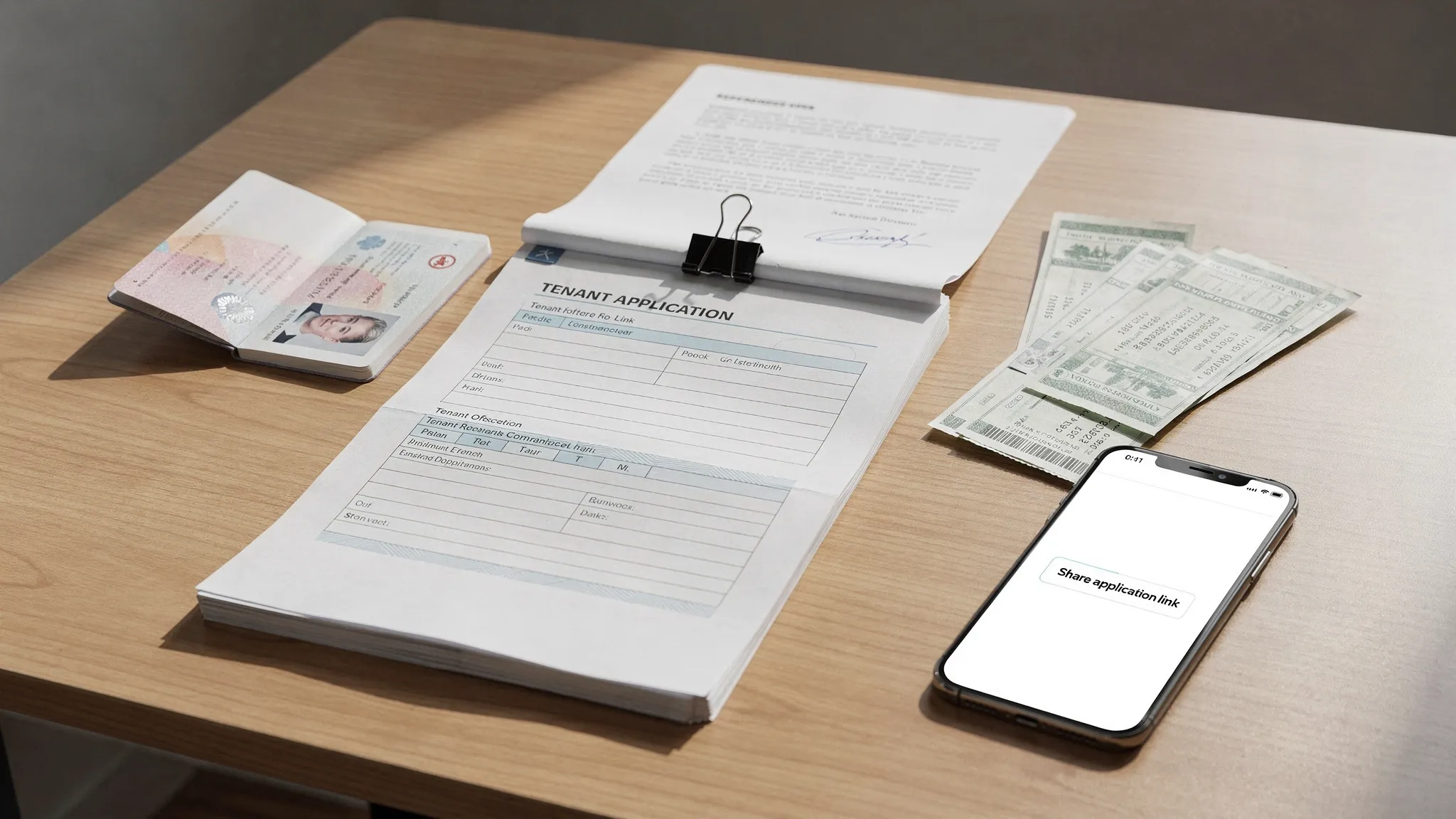
Most applicants lose because they send one of these:
Your packet should be designed so someone can open it on a phone and immediately see:
If you remember nothing else, remember this: reduce uncertainty and reduce effort.
You do not need 30 documents. You need the right ones, presented clearly.
This is the fastest way to turn “random inquiry” into “real candidate.” Keep it short and factual.
Include:
This note should read like a professional summary, not a negotiation.
Requirements vary by country, but most markets want to confirm you are real and allowed to rent.
Typical examples:
If you are unsure what a specific country expects, Movely’s country-by-country income guide can help you map “common asks” to a universal packet: Proof of Income for Renting: Accepted Documents by Country.
Income is usually the biggest approval lever. Provide whichever is strongest and most standard for your situation.
Common options:
If you are an expat, include one sentence explaining the income currency and where you will be paid from (this removes confusion and delays).
Landlords want to know your income is stable. Depending on your profile:
A strong reference is short, specific, and verifiable.
Include:
If you are coming from another country, add a one-liner: “Previous landlord is in [country], available by email/WhatsApp.” That small detail prevents a silent “too hard to verify” rejection.
If you have local credit, include a recent report when appropriate.
If you don’t have local credit history, do not wait for the landlord to raise it as an objection. Lead with substitutes that are easy to understand.
Movely has a dedicated guide here: How to Rent Without Local Credit History.
In your packet, you can add:
Be careful with offering to prepay months of rent. In some markets it is normal, in others it can create legal or fraud risk. Use it as a last resort and only with safe payment sequencing.
These are not mandatory, but they can push you to the top when many applicants look similar.
A one-page pet resume can reduce fear and speed approvals. Movely covers this approach in: Renting With Pets: How to Find Pet-Friendly Apartments.
This is a 3 to 5 line explanation of why you are moving, your timeline, and how you will handle viewings, signing, and move-in if you are not yet local.
If you are renting remotely, also see: Remote Apartment Hunting: How to Rent Without Seeing It.
You do not need a budget spreadsheet. But a sentence like this can eliminate doubt:
“I earn $X/month gross, the rent is $Y/month, and I keep an emergency buffer. I can provide pay stubs, bank statements, and references in one link.”
A great tenant packet can still fail if it is inconvenient.
A practical setup that works across countries:
TenantPacket_FirstnameLastname_MoveIn-June2026.pdf)Inside the folder, name files like a checklist:
01_ID_FirstnameLastname.pdf02_EmploymentLetter_Company.pdf03_PayStubs_Mar-Apr-May2026.pdf04_BankStatements_2mo.pdf05_LandlordReference.pdfThis makes you look organized, and it reduces back-and-forth.
As a baseline:
If your PDF is 40 pages, you are asking someone to do work. Put only the essentials in the PDF, keep extras in the folder.
A tenant packet contains sensitive information. You want to be fast and easy to verify, but not exposed.
Use these safeguards:
Rental scams and identity-theft attempts often rely on “send your documents first.” The FTC has ongoing consumer guidance on spotting and reporting rental listing scams: FTC rental scams resources.
For a practical, renter-friendly checklist, use: How to Avoid Rental Scams When Moving to a New Country.
A strong packet needs a strong delivery message. Your goal is to be concise, qualified, and ready.
Use this as an email, portal message, or WhatsApp note:
Subject (if email): Application ready for [Address] + tenant packet
Message:
Hello [Name],
I’m interested in renting [Address]. I can move in on [date] and I’m looking for a [12-month] lease (flexible by a few weeks if needed).
A quick snapshot: I work as a [role] at [company], and my monthly income is [amount]. It would be [number] occupants, and [no pets / one small dog].
Here is my tenant packet (PDF) and a folder with supporting documents: [link].
If the home is still available, I can view [two time windows] and submit the full application immediately.
Thank you, [Full name] [Local phone/WhatsApp]
This format answers the key questions before they are asked.
Callbacks are not only about the packet, they are about timing.
A simple rhythm that works in many markets:
If you want a systematic way to run your search like a pipeline, Movely’s “Anywhere System” is a strong companion: Find an Apartment Faster: A Simple System That Works Anywhere.
Fix: Add an employment letter, a direct HR contact (when appropriate), and clearly labeled pay stubs.
Fix: Put the essentials in the cover note (move-in date, lease length, occupants, pets, job).
Fix: Verify first, then share. Use redactions and controlled links.
Fix: Send the tenant packet with the first serious message. In fast markets, “I can send it later” often equals “next applicant.”
If you’re trying to find rental homes from abroad, juggling time zones, language barriers, and fast-moving listings, it can be hard to execute this process consistently.
That is where a tenant-side rental concierge can help, especially if you need:
Movely is built specifically for tenants relocating internationally, with multilingual support and coverage across 30+ countries. You can explore how it works at Movely.

What should a tenant packet include to get callbacks? Include a one-page cover note, proof of ID/status, proof of income (pay stubs and employment letter), and at least one reference. Add credit or strong substitutes if you lack local credit.
How long should my tenant packet be? Keep the main PDF short and scannable (often a few pages plus key proofs). Put extra documents in a folder link so they are available without bloating the PDF.
Should I send bank statements to apply for a rental? Only if they materially strengthen your application or are required locally. Share them selectively, redact non-essential details, and only after verifying the listing and the counterparty.
Is it safe to send my passport for a rental application? It can be, but only after you verify the listing and the landlord/agent identity. Consider redacting non-essential numbers early in the process, and use controlled folder permissions.
How do I apply if I don’t have local credit history? Lead with alternatives: employment stability, proof of funds, strong references, and a guarantor if available. This guide pairs well with Movely’s detailed playbook: How to Rent Without Local Credit History.
If you’ve built a solid tenant packet but you’re still not getting traction, the issue is often speed, verification, and execution across multiple listings at once.
Movely helps expats and international movers find and secure long-term housing abroad with AI-powered search, local agents for supervised viewings, and end-to-end tenant support (including contract review and move-in help). Learn more at wemovely.com.