June 7, 2026

How to get your deposit back
Nothing eases the pains of moving like a fully refunded security deposit. Make sure you get your cash back with these expert tips.
Struggling to find the perfect home? Explore Movely services that can help you!

Planning an international move in 2026 is a lot like planning a wedding: the headline price is never the full story. The good news is that most “surprise” costs are predictable once you know what to ask, what to measure, and which fees are tied to your route and timing.
This guide breaks down international moving costs into clear budget categories, shows what typically drives the price up or down, and gives you a practical way to forecast a realistic all-in number before you sign anything.
International moves are priced less like a simple delivery and more like a project. Your final total usually depends on a combination of:
In 2026, two practical cost multipliers remain especially common: fuel-related surcharges and port/terminal handling charges, which can change with carrier pricing and local congestion. Your quote may be accurate on the day it’s issued and still shift if it’s not properly locked in.
A clean budget separates “moving company charges” from “government and third-party charges.” You need both.
Some movers price from a virtual survey, others require an in-home or live video walkthrough. Either way, accuracy is everything.
When reviewing quotes, make sure you understand whether you’re looking at:
If you want a framework for how estimates should be presented and what movers must disclose, the U.S. Federal Motor Carrier Safety Administration’s consumer guidance is a solid baseline even though international moves add extra layers (FMCSA).
Packing is often the most underestimated cost because it’s a blend of time and risk.
Budget for:
If you’re trying to control costs, consider a hybrid approach: pack non-breakables yourself, pay professionals for kitchenware, glass, art, and anything high-value.

Even if your shipment is going by sea, it still moves by truck (or sometimes rail) before and after the ocean leg.
Common line items include:
These fees are highly address-specific. If you’re choosing housing abroad, easy loading access can reduce costs, not just stress.
This is the core transportation charge, but it’s not always the biggest number once you add destination services.
Sea freight is typically used for larger shipments and is priced based on volume and container usage (shared container shipments versus a dedicated container).
Air freight can make sense for small, time-sensitive shipments, or for a “starter set” while you wait for a sea shipment.
A practical budgeting move in 2026 is to plan a two-shipment strategy:
It can cost more overall, but it reduces the “temporary living” spending that often spikes when you arrive with nothing.
International moving is usually executed by partners on each end. Your quote may include, or exclude, services like:
Clarify what “delivery” means. Sometimes it means “to the building,” not “into your unit.”
Customs is where budgets get messy because costs split into:
Many countries allow household goods duty-free under specific conditions (for example, proof of residency change, ownership duration, item restrictions). Requirements can be strict and timelines matter.
For readers moving to or from the U.S., you can start with U.S. Customs and Border Protection guidance on household goods to understand typical documentation and inspection realities (CBP).
You’ll typically see options ranging from minimal carrier liability to full-value protection (wording varies by provider and lane).
Budget for insurance because:
Ask for the claims process in writing, including deadlines, documentation required, and whether damaged items must be retained for inspection.
Storage costs often appear when:
Storage can be priced monthly, sometimes with separate in and out handling fees. If you think storage is likely, plan for at least one full extra month in your budget so you don’t have to make rushed decisions.
Specialty items can dominate a budget fast. Common examples:
Crating is expensive, but it can be cheaper than replacing an item that cannot realistically survive a multi-leg move.
These are not moving-company fees, but they are real, and they hit right when your cash flow is stretched.
Include room in your 2026 budget for:
If you want to map these non-mover costs systematically, a utilities setup checklist can prevent duplicate charges and missed appointments: Utilities Setup Checklist: Internet, Power, Water and More.
Most bad moving experiences are not about one outrageous fee, they’re about five reasonable-sounding fees you didn’t plan for.
Look for these common friction points:
A helpful approach is to ask for a “not included” list in writing and then convert it into a budget line item.
Instead of chasing a single perfect number, build a budget with three bands: expected, stress-tested, and worst case.
Your inventory is your pricing foundation. Before requesting final quotes:
If you’re moving for work and also managing housing, keep your housing process tight so you don’t pay for storage and temporary stays longer than necessary. This guide can help: How to Rent an Apartment Abroad: Step-by-Step Guide.
Quotes are only comparable when the scope matches. Ask each mover to quote the same:
If one quote is dramatically cheaper, it may exclude destination charges, customs service, or delivery conditions.
A practical contingency is often 10% to 25% depending on how many variables you cannot control (housing date uncertainty, customs variability, peak season, complex access).
Your goal is not to overpay, it’s to avoid being forced into expensive last-minute choices.
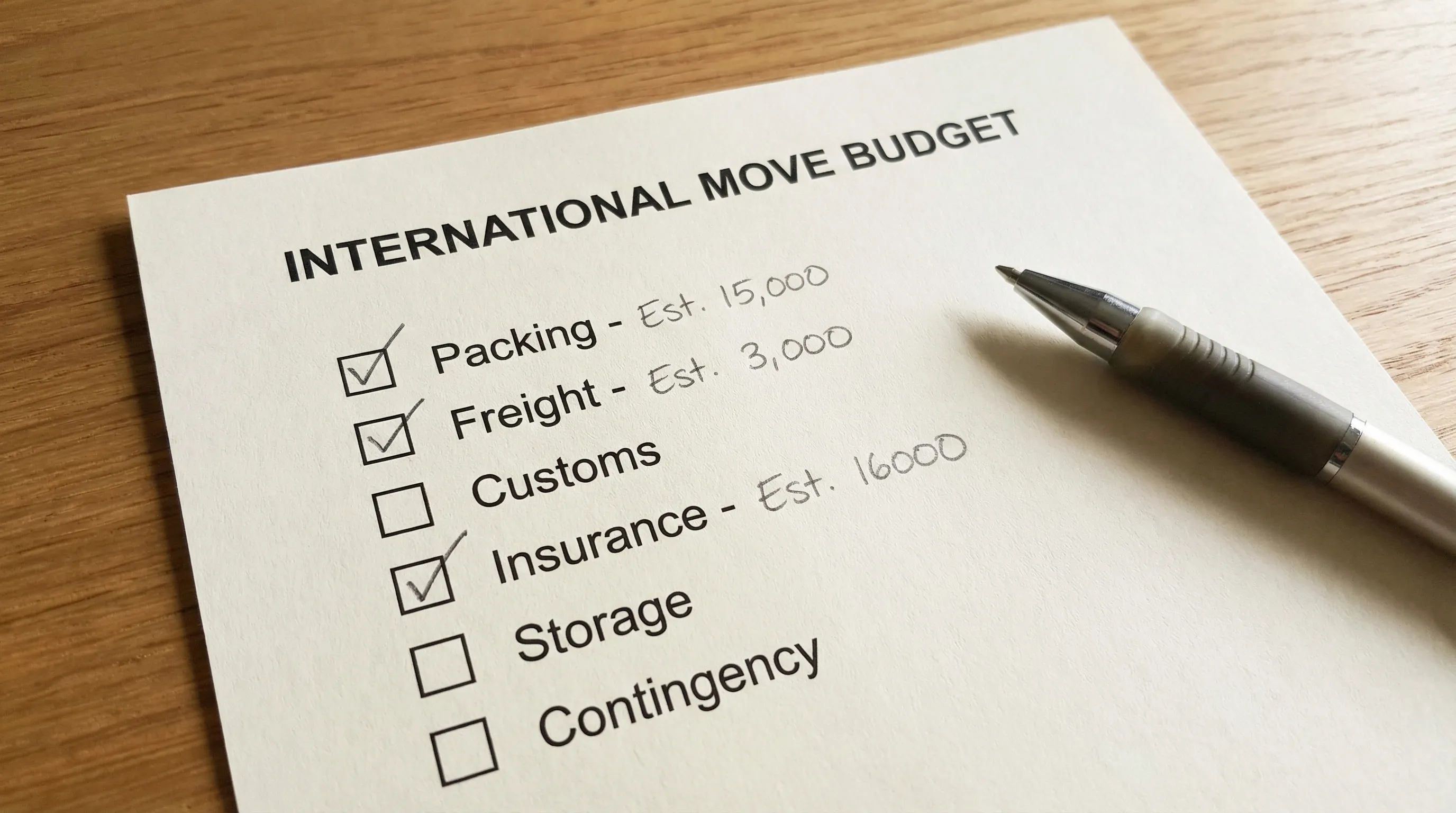
Saving money on an international move is mostly about reducing volume and uncertainty, not about finding a “secret cheap shipper.”
Every cubic foot matters. Before your survey:
If your job and school calendar allows it, off-peak dates can improve both pricing and schedule flexibility.
Instead of shipping everything by air, identify what you truly need for the first 2 to 4 weeks and keep it with you or ship it separately. This prevents expensive last-minute purchases abroad.
Take photos of high-value items, keep purchase receipts when available, and label boxes by room and contents category. That makes customs, delivery, and claims smoother.
For founders and small brands, the cheapest box is often the one you never ship. If you’re relocating and need to rebuild product runs locally, partnering with an apparel development and manufacturing partner can sometimes be more cost-effective than moving large quantities of samples, fabrics, or finished goods across borders.
You don’t need to be an expert, you just need clear answers.
Ask:
If you’re choosing between full-service relocation support versus coordinating vendors yourself, this explainer can help you compare scopes: Relocation Services Explained: What’s Included and What’s Not.
How much should I budget for international moving costs in 2026? A reasonable starting point is to budget in bands: an “expected” quote total plus a 10% to 25% contingency. Your route, shipment size, service level, and customs requirements matter more than the year.
What is the biggest cost in an international move? For many households, the biggest line items are packing labor plus international freight, but destination handling, customs service, and storage can compete with or exceed freight depending on the lane.
Are customs duties included in international moving quotes? Often no. Many movers include customs service fees (documentation, coordination), but duties and taxes are usually paid to the destination country and depend on your status and item eligibility.
Is it cheaper to ship by air or sea? Sea freight is typically cheaper for larger shipments, while air freight is faster and often used for small, urgent shipments. Some movers combine both so you have essentials quickly without paying air rates for everything.
How can I avoid surprise fees at destination? Ask for a written “not included” list, confirm whether destination charges are prepaid or payable on arrival, and clarify delivery conditions (stairs, elevators, parking, appointment windows).
Once you have your cost bands, build a timeline backward from your move date: survey and quotes, document collection, housing dates, packing window, and arrival essentials. Budgeting works best when it is tied to decisions (what you ship, when you ship, and how you’ll live while you wait for your goods).