June 7, 2026

How to get your deposit back
Nothing eases the pains of moving like a fully refunded security deposit. Make sure you get your cash back with these expert tips.
Struggling to find the perfect home? Explore Movely services that can help you!

Typing “find apartments near me” into a search bar gives you options fast. It does not tell you whether the street feels safe after dark, whether the commute works on a rainy Tuesday, or whether the apartment sits on the noisy side of a train line.
That is where micro-area selection matters.
A micro-area is smaller than a neighborhood. It might be a five-block pocket, the area around one transit stop, the quiet side of a main road, or the few streets between your office, grocery store, and gym. Two apartments can be listed in the same neighborhood and have completely different daily-life outcomes.
For long-term renters, especially anyone relocating to a new city or country, choosing the right micro-area is often more important than finding the prettiest listing. A great apartment in the wrong pocket can become expensive, isolating, or exhausting. A slightly simpler apartment in the right micro-area can make the whole move feel easier.
Most apartment searches define “near” by distance. That is useful, but incomplete. One mile can be a pleasant 15-minute walk in a flat, well-lit area. It can also be a stressful 35-minute journey if you need to cross highways, climb steep streets, wait for unreliable transit, or navigate unsafe intersections.
A better definition of “near me” is practical access. Your apartment should be near the things you actually use, at the times you actually use them.
Before comparing listings, define your real-life anchors:
If you are not in the city yet, replace “me” with your most reliable anchor. That could be your future office, a school campus, a temporary rental, or the train station you expect to use most.
A neighborhood name can hide huge differences. In many cities, one side of a station is residential and calm, while the other is crowded with nightlife. One end of a district may have newer buildings and better sidewalks, while another has cheaper rent but worse access to daily essentials.
When you search for apartments near you, zoom in until you can describe the exact pocket you are considering. A useful micro-area usually has three qualities.
First, it has boundaries you can understand. These might be major roads, train tracks, rivers, hills, commercial strips, or park edges. Second, it has a daily rhythm. It feels different at 8 a.m., 6 p.m., and 11 p.m., and you need to know whether that rhythm fits your life. Third, it has enough rental inventory that you are not forced to accept one weak listing just to be in the area.
Think in blocks, not labels. “Near the north entrance of the metro station, west of the main road, within two blocks of the supermarket” is more useful than “downtown” or “close to transit.”
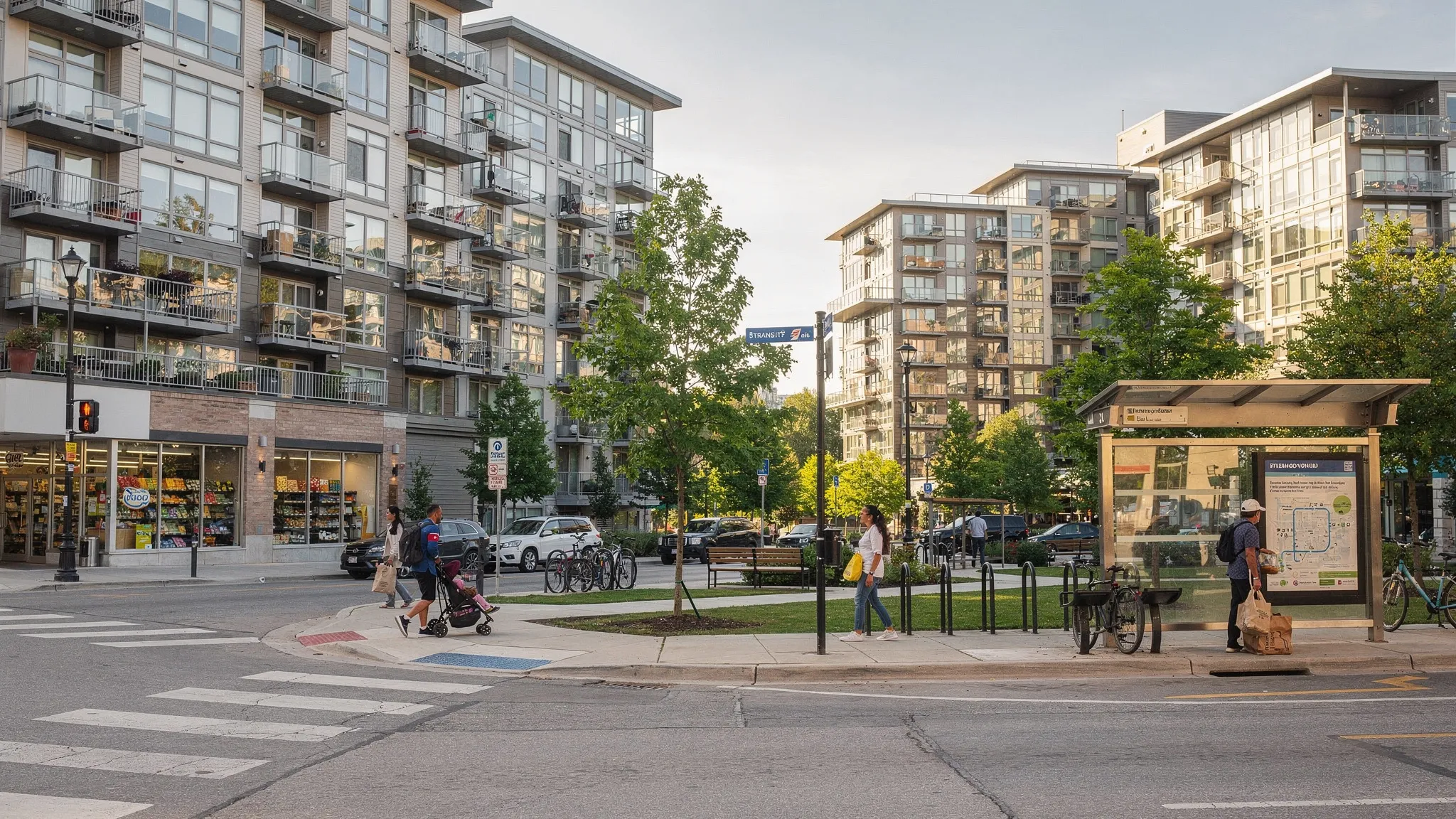
The right micro-area is the one that protects your most repeated routines. Weekend impressions matter less than weekday friction.
Ask yourself what will happen on an ordinary day. How long does it take to leave home, get coffee or breakfast, reach transit, arrive at work, buy groceries, and get home safely? Can you do that when it rains, when you are tired, or when transit is delayed?
This is especially important when relocating. In your first month, everything takes more effort: setting up utilities, finding doctors, opening bank accounts, learning local apps, and understanding building rules. A micro-area that reduces errands can save far more stress than a marginally larger living room.
Use this simple rule: if you do something three or more times per week, it should be easy from your apartment. If it is only a monthly activity, it can be farther away.
Map radius searches are tempting, but they often produce misleading results. Instead of asking, “What is within one mile?” ask, “What can I reliably reach in 10, 20, and 30 minutes?”
Create three practical zones:
When you evaluate an apartment, test routes at the right time of day. A commute that looks fine at noon might be overcrowded at 8:30 a.m. A street that seems quiet on Sunday afternoon may be loud every Friday night. If you work late or travel often, check nighttime routes too.
For remote renters, use street view, local transit apps, community forums, and live video viewings to verify the route. Ask the person showing the apartment to walk from the building entrance to the nearest transit stop or main street during a live call if possible.
A listing can photograph beautifully while the block creates daily problems. Before you apply, look beyond the front door.
Pay attention to the first five minutes outside the building. Are sidewalks continuous and well lit? Is the entrance hidden or visible? Are there busy loading zones, late-night bars, construction sites, or waste collection points nearby? Does the route to transit require crossing uncomfortable roads?
Noise deserves special attention. Road traffic, trains, nightlife, schools, delivery bays, and thin internal walls can all affect sleep and work-from-home comfort. If acoustic comfort is a priority, look for double glazing, solid doors, sensible room orientation, and soft interior finishes. For design inspiration on how acoustics can be improved beautifully in interiors, companies such as Reducel create custom acoustic ceiling and wall panels, though renters should always confirm what alterations are allowed before installing anything permanent.
Light is another block-level factor. A unit facing a narrow courtyard may be quiet but dark. A unit facing south or west may be bright but hot in summer. In dense cities, the difference between a front-facing and rear-facing apartment can be dramatic.
The cheapest apartment is not always the cheapest place to live. Micro-area choices affect transportation, food, utilities, insurance, parking, and time.
A lower-rent apartment may cost more if you need a car, frequent rideshares, paid parking, or longer transit passes. A place far from affordable groceries can quietly raise your monthly spending. A poorly connected area can also reduce your flexibility if you change jobs or start classes in a different part of town.
When comparing micro-areas, estimate total monthly living cost, not just rent. Include transport, parking, utilities, local taxes or municipal charges where applicable, delivery fees, and the cost of replacing convenience with time.
This matters even more for international renters. If you are new to a country, being close to practical services can be worth paying slightly more during your first lease. Once you understand the city better, you can optimize for rent more aggressively.
Safety is not only about crime statistics. It is also about whether you feel comfortable using the area during your actual schedule.
Use official local data when available, but do not stop there. Walk or virtually inspect the route from the apartment to transit, groceries, and parking. Look for lighting, active storefronts, visibility, road crossings, and how many people are around at different times.
If you are viewing in person, arrive a little early and stay in the area after the appointment. Buy something nearby, sit in a cafe, or walk the route you would use every day. If you are searching remotely, ask a local contact, relocation agent, or trusted representative to check the area at a realistic time, not just during a scheduled showing.
A good micro-area should feel manageable when life is imperfect: late arrival, bad weather, carrying groceries, low phone battery, or unfamiliar language.
In some cities, micro-area choice affects more than lifestyle. It can affect eligibility, administration, and long-term convenience.
For example, school catchment areas may change block by block. Parking permits may be limited to specific zones. Local registration rules can vary by building or municipality. Waste collection, recycling, short-term rental restrictions, pet rules, and building association policies may also differ.
If you are moving abroad, verify whether the address supports the paperwork you need. Some renters discover too late that a unit is not suitable for local registration, that utilities are difficult to transfer, or that the contract type does not fit their stay.
Before signing, ask direct questions:
Get important answers in writing. Verbal reassurance is not enough when you are committing to a long-term lease.
Beautiful apartments can make renters ignore weak locations. To stay objective, score the micro-area before scoring the apartment.
Rate each category from 1 to 5:
A micro-area does not need a perfect score. It needs to be strong on the factors you will feel every week. If a location scores poorly on your top two priorities, the apartment itself needs to be exceptional, and the lease should be flexible enough to justify the risk.
Some issues are manageable. Others should make you pause before applying.
Be cautious if the rent is far below comparable apartments nearby without a clear reason. It may signal noise, poor management, difficult access, or listing problems. Also be careful with listings that describe the area using vague phrases like “up-and-coming” without showing practical benefits such as transit, groceries, or safety improvements.
A micro-area may be a poor fit if your daily route depends on one unreliable bus, one unsafe crossing, or one expensive parking option. It may also be wrong if the apartment is isolated from the community you need, especially when moving abroad and trying to build a routine quickly.
The biggest red flag is a mismatch between the listing promise and real-life use. “Close to downtown” means little if getting there requires an inconvenient transfer. “Near transit” is not enough if the station entrance is a 15-minute walk away. “Quiet residential street” may not matter if the bedroom faces a major road.
Renters often face a difficult choice: a nicer apartment in a weaker location, or a simpler apartment in a better micro-area.
For long-term rentals, the better micro-area usually wins when it improves your daily routine, reduces transport dependency, and helps you settle faster. You can often adapt furniture, storage, and decor. You cannot easily move a building closer to your job, make a dark street feel safer, or remove a nightclub from downstairs.
The better apartment may win if you work from home full time, need specific accessibility features, have pets with limited rental options, or require a larger layout for family reasons. Even then, be honest about what the micro-area will cost you in time, money, and energy.
A useful final question is: “Would I still choose this apartment if I had to live this exact weekday 200 times?” If the answer is no, keep looking.
When you are searching locally, you can test micro-areas yourself. When you are relocating, working under time pressure, or renting from another country, that is much harder.
Movely supports renters with tenant-side relocation help across 30+ countries, combining AI-powered search, manual property search, local agents, supervised viewings, multilingual support, tenant portfolio improvement, contract legal review, and post move-in assistance. That means you are not only comparing listings, you are also getting help understanding whether the area, building, lease, and move-in process fit your real situation.
If you want a broader search system before narrowing down micro-areas, read Movely’s guide to finding an apartment faster. If you are still comparing neighborhoods at a higher level, start with how to choose a neighborhood when you’re new in town.
How small should a micro-area be when searching for apartments near me? A useful micro-area is usually a few blocks, one station zone, or a 10 to 15-minute walking pocket. It should be small enough that you can describe the exact routes, noise sources, and daily amenities that affect the apartment.
Is it better to live closer to work or closer to lifestyle amenities? Prioritize the destination you use most often and the routine that creates the most stress when it fails. For many renters, that is work or school. For remote workers, groceries, light, noise, fitness, and social connection may matter more.
How can I evaluate a micro-area if I am renting from abroad? Use live video viewings, street view, local transit apps, neighborhood forums, and a trusted local representative. Ask for video of the building entrance, nearby streets, transit route, and noise conditions at realistic times.
Should I pay more rent for a better micro-area? Sometimes, yes. A better micro-area can reduce transport costs, setup stress, safety concerns, and daily friction. Compare total monthly cost and quality of life, not rent alone.
What is the biggest mistake renters make with “find apartments near me” searches? The biggest mistake is treating map distance as the whole decision. A nearby apartment can still be inconvenient if routes are unsafe, transit is unreliable, noise is high, or essentials are harder to reach than they appear.
The best apartment search does not start with every available listing. It starts with the micro-areas that make your daily life work.
If you are moving abroad, renting remotely, or trying to secure long-term housing in an unfamiliar city, Movely can help you search smarter, verify options, improve your tenant profile, review contracts, and coordinate the move-in process with local support.