May 9, 2026

Apartment Finding Service: What’s Included and What’s Not
Apartment finding service guide: learn what is included, what costs extra, and how expats can choose safer tenant-side support.
Struggling to find the perfect home? Explore Movely services that can help you!
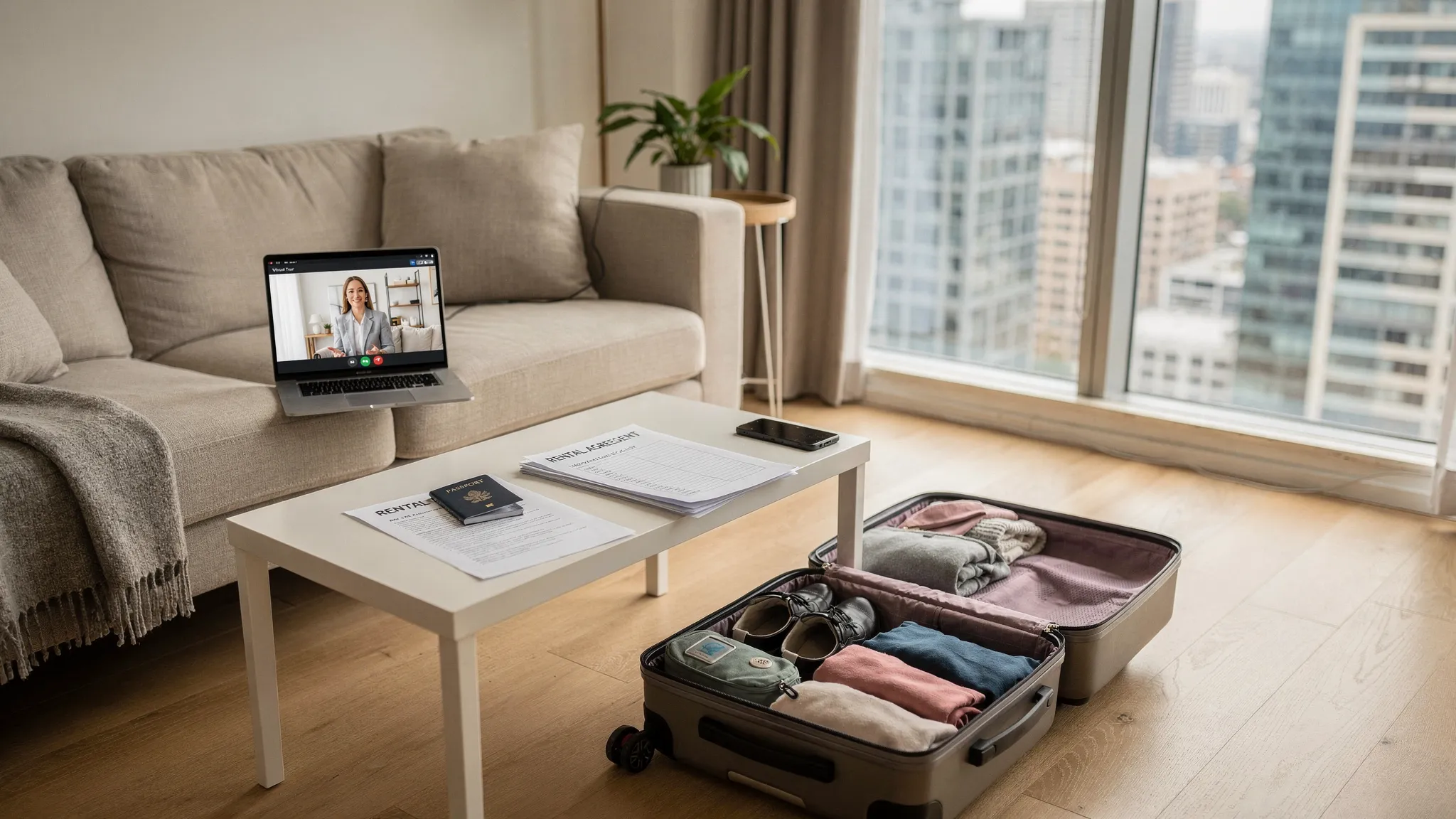
Renting a place in another country is exciting, but it can also be expensive to get wrong. The biggest pitfalls usually come from three things: misunderstanding local rental norms, signing documents you cannot fully interpret, and sending money before you have verified the listing and landlord.
This step-by-step guide walks you through a practical, repeatable process you can use almost anywhere, whether you are relocating for work, study, or a long-term trip.
In many countries, the process is not just “find a listing and sign.” You may need to navigate:
Also, the rental market can move very fast in major cities. If you wait until you arrive, you might pay more for temporary housing than you planned. If you rent sight-unseen, your scam risk goes up. The goal is to plan enough to move quickly, without taking avoidable risks.
Write down what you truly need so you do not make decisions under pressure. At minimum, define:
A common relocation mistake is budgeting only for rent and ignoring utilities, building fees, internet setup, and seasonal heating or cooling costs.
Some countries or landlords require a residency status, local tax ID, or local bank account to sign a long lease. Others allow it, but with stricter conditions (larger deposit, guarantor, higher proof-of-income).
Start with official guidance for your destination:
If your visa is not final, consider a flexible short-term rental first, then convert to a long-term lease once your paperwork is settled.
Look up the local norms for:
This helps you compare listings correctly and avoid surprise costs.
Plan for upfront costs that hit before you sleep in the apartment. Use this checklist to estimate your cash needs.
Cost item            | What it covers                                     | Common timing
Security deposit     | Damage and unpaid rent protection for the landlord | Before move-in
First month’s rent   | Sometimes prorated                                 | Before move-in
Last month’s rent    | Required in some markets                           | Before move-in
Agent or broker fee  | Finding and showing properties, paperwork          | At signing
Utilities setup      | Electricity, gas, water, trash                     | First weeks
Internet setup       | Router, installation, contract                     | First weeks
Furniture and basics | If unfurnished | First month Requirements vary, but many landlords want a consistent “renter file.” Prepare scanned PDFs in advance.
Document                    | Why it is requested   | Tips
Passport or national ID     | Identity verification | Keep a redacted copy for early screening (hide ID numbers where appropriate)
Proof of income             | Ability to pay        | Offer recent pay slips, an employment letter, or contracts
Bank statements             | Financial stability   | Remove unrelated sensitive transactions if allowed
Credit report               | Risk assessment       | Ask if a local credit check is required
Previous landlord reference | Reliability           | Short, factual references work best
Guarantor information | Extra security | Sometimes required for students or new arrivals There is no single best place to find apartments abroad. Your best channel depends on how long you will stay and how much risk you can tolerate.
Shortlist your options using these criteria:
If you are not physically in the country, prioritize channels that support verified identity, contracts, and documented payment flows.
Most scams are avoidable if you slow down and verify a few basics. Red flags include:
Ask direct questions early:
If something feels rushed or inconsistent, treat that discomfort as data.
If you can view in person, bring a checklist and take your own photos. If you cannot, insist on a live walkthrough where you can request specific actions (open the fridge, show hot water, view the building entrance, look out windows).
Also confirm the practical details that affect your real monthly cost:

In some markets, negotiation is rare. In others, it is expected. Even when rent is fixed, you can sometimes negotiate:
Keep negotiation factual. Reference comparable listings and your strengths as a tenant (stable income, longer stay, strong references).
Before signing, confirm the lease includes:
For payments, prefer traceable methods (bank transfer to the correct legal entity, card payments through reputable systems, or escrow where common). Always get receipts.
If a landlord insists on untraceable payment methods, walk away.
On move-in day, do a written condition report and photo documentation. This is one of the simplest ways to protect your deposit.
Capture:
Send the documentation to the landlord or agent immediately so there is a timestamped record.
Some places require you to register your address with local authorities shortly after moving. Missing that step can create issues for banking, healthcare access, or immigration compliance.
Keep a “rental folder” with:
If you later need to change apartments, these records also make your next application easier.
Sometimes you have no choice, especially for tight relocation timelines. In that case, reduce risk systematically:
These patterns repeat across countries:
The “too-good-to-be-true” listing: Stolen photos, low price, urgent story. Solution: compare with local market averages, insist on live viewing, verify identity.
The fake key handover: Someone offers to mail keys after payment. Solution: never pay full move-in costs before you have a signed contract and verified ownership or authorization.
The sublet without permission: A tenant sublets illegally. Solution: ensure the contract is valid, and if subletting, confirm the owner’s written approval where required.
The deposit vanishes: Landlord invents damage at move-out. Solution: move-in and move-out inspection reports, date-stamped photos, documented communication.
If you want a quick baseline for consumer rights in the EU, the European Consumer Centres Network is a helpful reference point (especially for cross-border disputes).
Use this as a planning guide, then adapt it to your destination market speed.
Time before move | What to do                                                   | Outcome
8 to 12 weeks    | Visa and residency research, budget, shortlist neighborhoods | Clear constraints and target areas
6 to 8 weeks     | Prepare documents, start searches, request virtual tours     | Ready-to-apply renter file
3 to 6 weeks     | Submit applications, verify landlords, review lease drafts   | Secure the right apartment (or temporary plan)
1 to 2 weeks     | Sign, pay safely, schedule utilities and internet            | Smooth move-in logistics
Move-in week | Inspection report, meter readings, registration steps | Deposit protection and compliance As a final filter, make sure you can answer “yes” to these:

In a hot rental market, speed matters, but clarity matters more. If you prepare your documents early, learn the local norms, and stick to traceable payments and verifiable tours, you can move quickly without gambling with your deposit or your safety.