June 7, 2026

How to get your deposit back
Nothing eases the pains of moving like a fully refunded security deposit. Make sure you get your cash back with these expert tips.
Struggling to find the perfect home? Explore Movely services that can help you!
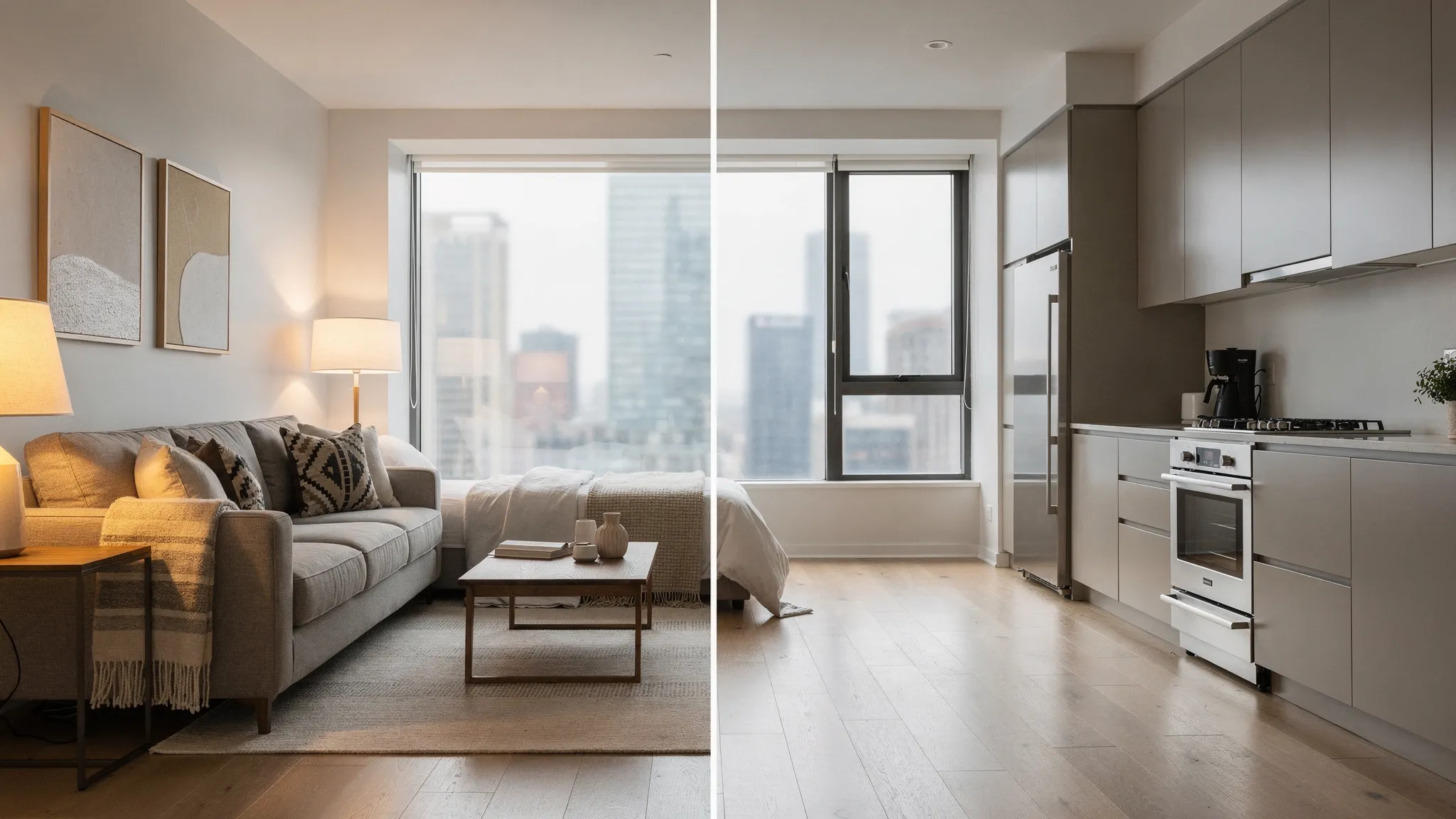
Choosing between a furnished and an unfurnished rental is one of those decisions that feels “small” until you’re living with it. It changes your upfront cash needs, how fast you can move in, what you’ll pay each month, and even how much time you’ll spend troubleshooting basics like Wi-Fi, cookware, and a place to sit.
If you’re relocating (especially across state lines or internationally), the “right” choice usually comes down to one thing: your timeline. The shorter and less certain your stay, the more attractive furnished becomes. The longer and more stable your plan, the more unfurnished tends to win on cost and comfort.
These terms are not perfectly standardized, and they vary by country, city, and even landlord.
A furnished rental typically includes the essential furniture you’d need to live day-to-day, such as:
The big catch: “furnished” doesn’t guarantee quality or completeness. One furnished place might come with a fully stocked kitchen and linens, another might only have a bed and a wobbly table.
Practical tip: ask for an inventory list (and ideally photos) before you commit.
In the U.S., “unfurnished” usually still includes major built-ins and appliances (often stove/oven, fridge, dishwasher, sometimes washer/dryer). But outside the U.S., an “unfurnished” apartment may be far more bare, occasionally even without light fixtures or kitchen appliances.
Practical tip for international moves: confirm what “unfurnished” includes in that market, in writing.
This middle category is common in relocation markets. It might include a bed and dresser but no sofa, or a dining set but no desk.
Partly furnished can be a great compromise if you already own a few key items and want to avoid starting from zero.

Faster move-in with fewer logistics. If you’re landing in a new city and need to be functional on day one (work, school, jet lag, kids), furnished removes a huge chunk of setup time.
Lower upfront burden (sometimes). You may avoid large furniture purchases, delivery fees, assembly, and the “temporary solutions” shopping spree (air mattress, cheap desk, extra cookware).
Great for shorter stays and uncertain plans. If you’re testing a neighborhood, on a fixed-term assignment, or waiting to buy a home, furnished reduces commitment.
Often bundled utilities and Wi-Fi. Many furnished rentals, especially mid-term options, include utilities. That can simplify budgeting and reduce admin during relocation.
Higher monthly rent is common. Furnished units typically command a premium for convenience, wear-and-tear, and included items.
Furniture quality and cleanliness vary. A furnished rental can be “ready” and still feel uncomfortable if the mattress is old, the couch is stained, or the kitchen setup is minimal.
More deposit and damage risk. You’re responsible for more items, which can increase disputes at move-out if condition and expectations are not documented.
Limited ability to personalize. If you work from home, have ergonomic needs, or care about aesthetics, living with someone else’s choices can get old fast.
Furnished often makes sense when:
If you’re deciding between short-term and long-term options more broadly, this guide can help you frame the tradeoffs: Renting vs. Short-Term Rentals: What’s Best for Relocation?
Usually lower monthly rent for comparable locations. You’re not paying the convenience premium each month.
Comfort and control. You pick the mattress, desk chair, and layout that fit your body and routine. This matters a lot for families and remote workers.
Better long-term economics. If you stay long enough, furniture becomes an asset (even if it depreciates) and your monthly housing cost can be materially lower.
Clearer “wear and tear” boundaries. There are fewer personal-property items to dispute at move-out.
Bigger upfront costs. Furniture, delivery, assembly, moving supplies, and sometimes appliance add-ons can create a painful first-month total.
Time and coordination. If you’re arriving without a car, don’t speak the local language yet, or start work immediately, furnishing a home can be exhausting.
Moving and disposal costs later. If you leave the city (or country) again, you may pay for storage, resale, shipping, or disposal.
Unfurnished tends to win when:
For planning your search and avoiding expensive oversights, keep this handy: Home Search Checklist for Long-Term Rentals
Rent is only one line item. A smarter approach is to compare total cost over your expected stay.
Here’s a practical way to think about it:
Total cost of living (over your stay) =
For a short stay, the extra monthly rent can be less than what you’d spend furnishing and then getting rid of items later.
This is especially true if you would otherwise:
If you stay long enough, you stop “renting convenience” each month.
A useful mental model is break-even timing:
Relocation already comes with a heavy admin load: paperwork, banking, phone plans, commuting patterns, schools, and learning a new city.
If furnished saves you 20 hours of setup in week one, that’s not “free”. It might be worth paying for, especially if you’re starting a demanding job or managing a family transition.
Before signing, treat furnished vs unfurnished as a contract difference, not just a lifestyle preference.
Inventory and condition documentation. Ask for a dated list and photos of furniture, appliances, and any included items.
Replacement vs repair rules. If something breaks, are you responsible for replacement cost, repair cost, or nothing if it’s normal wear?
Cleaning expectations. Some furnished rentals include mandatory professional cleaning fees or stricter move-out standards.
Utilities and caps. “Utilities included” sometimes means “included up to a limit.” Clarify who pays overages.
Internet specifics. If you work remotely, confirm actual speed and reliability. If possible, test during the viewing.
Appliances included (and who maintains them). Especially washer/dryer and air conditioning.
What modifications are allowed. Painting, mounting TVs, drilling shelves, installing smart locks, and curtain hardware.
Move-in logistics. Elevator reservations, loading dock access, delivery windows, parking permits.
Utility setup and timeline. If you’re new in town, getting power and internet active on time can be harder than expected. This checklist helps: Utilities Setup Checklist: Internet, Power, Water and More
Most deposit disputes come down to poor documentation.
For deeper guidance, see: Security Deposit Rules: What Tenants Should Know
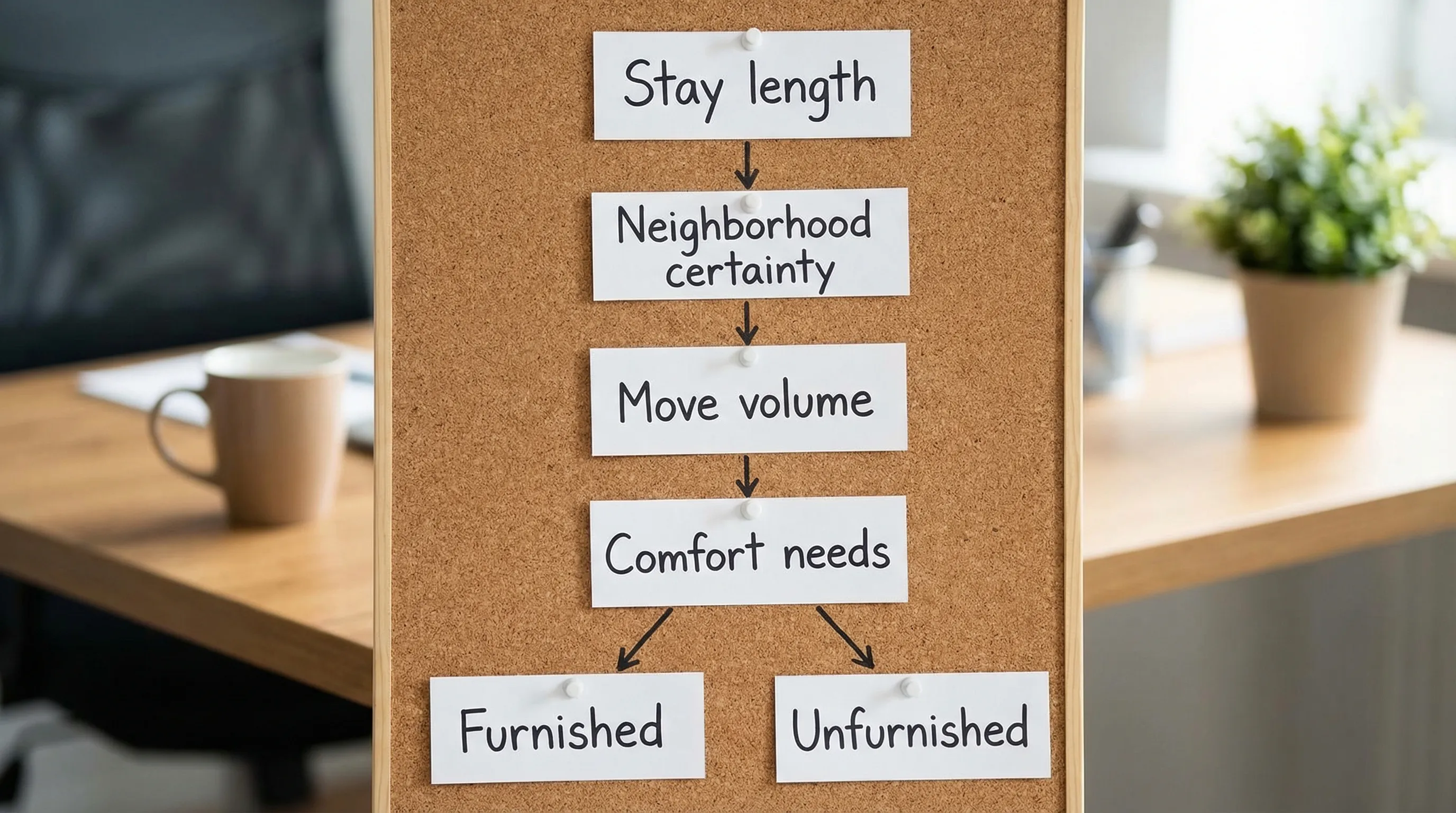
Instead of debating “furnished vs unfurnished” in the abstract, answer these four questions.
If you’re not sure where you want to live, paying extra for a furnished place for a few months can be cheaper than signing a long lease in the wrong area.
If you’re still narrowing down locations, this can help you choose faster: How to Choose a Neighborhood When You’re New in Town
If you already own furniture and can move it cheaply, unfurnished becomes more attractive. If you’re arriving with suitcases, furnished removes a major barrier.
Some people don’t mind a mismatched couch and basic cookware. Others need a proper desk, a good mattress, and a home that feels settled.
Be honest: comfort and routine are productivity tools, not luxuries.
A furnished viewing should feel more like checking into a “mini home” than touring an empty unit. An unfurnished viewing is about structure, maintenance, and lease terms.
For a comprehensive script, use: What to Ask on a Rental Viewing: The Ultimate Question List
Furnished rentals are popular with scammers because they attract newcomers who are willing to book quickly. If you’re renting remotely, follow a verification process (video tour, identity checks, safe payment sequencing) before you send money.
Start here: How to Avoid Rental Scams When Moving to a New Country
Whether you choose furnished or unfurnished, a small housewarming can help you build community in a new city. If you want an easy way to collect everyone’s photos in one shared place, consider using an instant event photo sharing tool that lets guests contribute via QR code without creating accounts.
Is a furnished rental always more expensive than an unfurnished one? Not always, but it often carries a monthly premium. The real comparison is total cost over your stay, including utilities, furniture, moving, and setup.
Do furnished rentals usually include utilities and internet? Many do, especially mid-term rentals, but you should confirm exactly what’s included and whether there are usage caps.
What should I document when moving into a furnished apartment? Get an inventory list, take photos and videos of each item’s condition, and email any pre-existing damage to the landlord or manager so you have a timestamp.
What is “partly furnished” and is it worth it? Partly furnished typically includes a few large items (like a bed and table) but not everything. It can be the best value if you want lower rent than fully furnished while avoiding major upfront purchases.
When does unfurnished become the cheaper option? It depends on the rent premium for furnished housing and how much it costs you to furnish (and later move or sell) your items. Many renters find unfurnished starts to win once they’re staying around a year or more, but you should run the break-even math for your situation.
If you’re deciding between two listings, don’t rely on vibes. Compare the true monthly cost, confirm what’s included in writing, and use a consistent tour checklist.