Back to Blog

Cleaning Before Move-In: What’s Worth Doing First

Cleaning before move-in is one of the few moving tasks that pays off immediately. It makes the home feel like yours faster, reduces allergens and odors you did not sign up for, and helps you spot maintenance issues (leaks, pests, broken seals) while the unit is still empty.

The trick is not trying to “deep clean everything.” It’s doing the right cleaning first, in the right order, so you don’t re-clean the same surfaces after dust and grime fall from above.

The simple priority rule: health, then function, then comfort

If you are short on time, decide what’s “worth doing” with this rule:

  • Health (non-negotiable): places that can make you sick or trigger allergies.
  • Function (prevents costly surprises): anything that affects how the home works day-to-day.
  • Comfort (nice-to-have): details that make the space feel fresh and calm.

Most move-in cleaning regret comes from doing comfort tasks (like perfect windows) before health and function tasks (like a greasy fridge seal or a musty HVAC filter).

Do these first (the move-in cleaning “non-negotiables”)

These are the highest return tasks for renters and homeowners because they reduce germs, odors, and “mystery grime” from prior occupants.

Kitchen: surfaces you will eat from

Focus on areas that touch food, hands, and heat.

  • Inside the refrigerator and freezer: remove drawers, wash with warm soapy water, then dry fully. Wipe the door gasket (seals hold odor and residue).
  • Inside cabinets and drawers: vacuum crumbs first, then wipe. Pay extra attention to the utensil drawer and under-sink cabinet.
  • Stovetop and oven front: degrease knobs and handles, then the cooktop surface. If you smell old oil when the oven heats, plan a deeper oven clean later.
  • Sink and faucet: scrub, then disinfect high-touch points.

Cleaning and disinfecting are different. In most homes, cleaning with soap or detergent and water removes a large portion of germs and is the most important step. Disinfectants work best after the surface is clean. The EPA explains the difference and recommended approach (and why contact time on the label matters).

Bathrooms: where “looks clean” often isn’t

Bathrooms are the fastest place to turn a new home into a comfortable home.

  • Toilet: clean under the rim, seat hinges, and the base. Wipe the flush handle or button.
  • Shower and tub: remove hair from drains, scrub grout lines, and clean showerhead nozzles if water flow seems uneven.
  • Vanity and faucet: clean handles and around the drain.
  • Vent fan: if dusty, vacuum the cover. Poor bathroom ventilation often leads to mildew later.

Floors: do them last (but do them before you unpack)

If you do floors too early, you will re-dirty them while cleaning everything else.

  • Hard floors: vacuum first (especially edges), then mop.
  • Carpet: vacuum slowly. If there is odor, visible staining, or you have allergies, consider professional carpet cleaning before furniture arrives.

High-touch points: quick win, big impact

Wipe and disinfect these early, especially if you are moving into a rental or a unit that sat vacant:

  • Light switches and dimmers
  • Door knobs and deadbolts (both sides)
  • Cabinet pulls
  • Thermostat and appliance buttons
  • Window latches

Air and allergens: the “invisible clean” that matters

A place can look spotless and still feel dusty.

  • Replace HVAC filter (if you have access). A fresh filter can reduce lingering dust and odors quickly.
  • Vacuum vents and returns with a brush attachment.
  • Air out the unit for 30 to 60 minutes if outdoor air quality is good.

If you are moving into an apartment and cannot access the filter, ask the property manager in writing to replace it. It is a small request that can make a big difference.
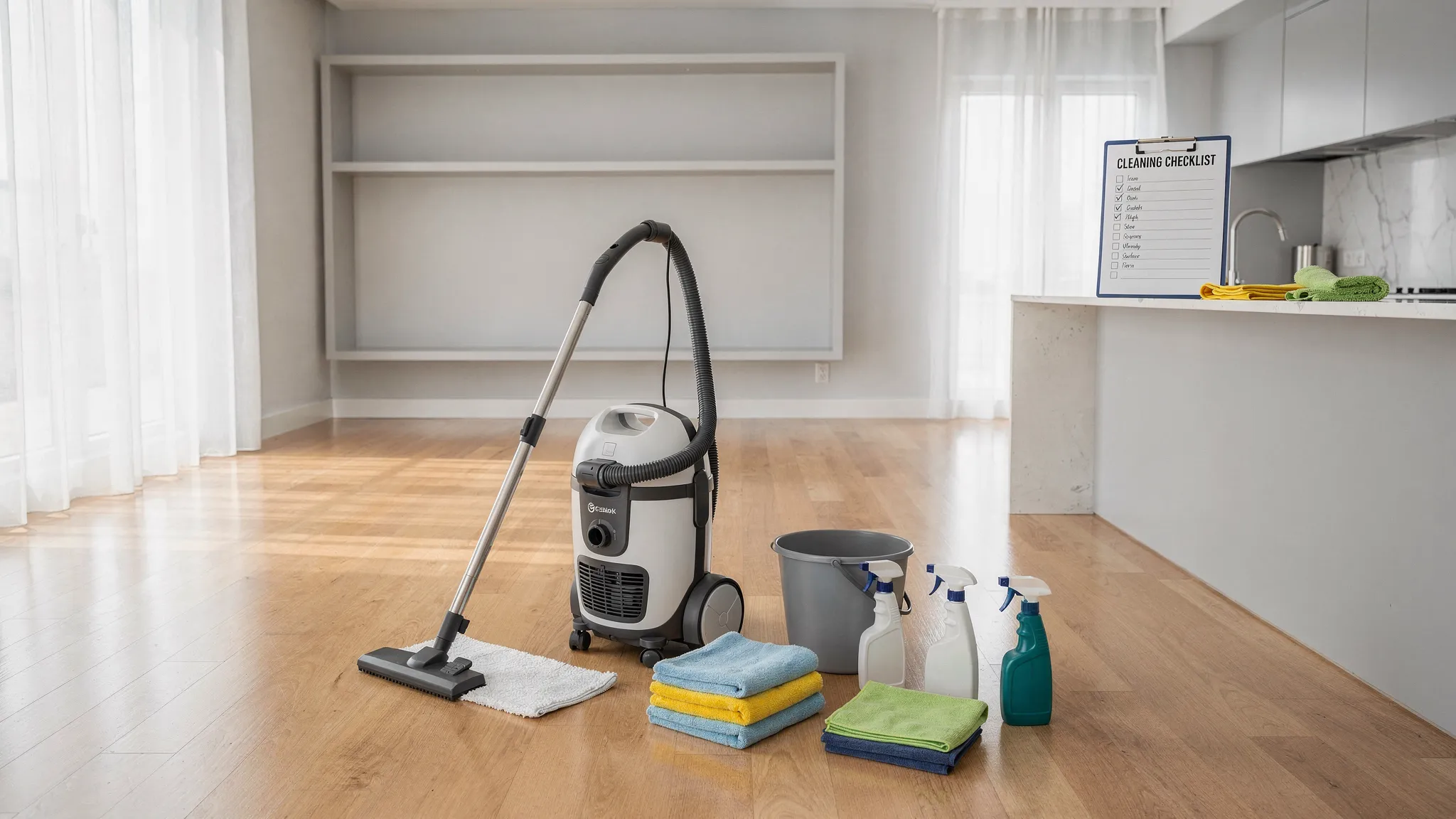
An empty apartment living room with cleaning supplies arranged on the floor, including a vacuum, mop, microfiber cloths, and an open checklist clipboard on a nearby counter.

Clean top to bottom, and do it while the home is empty

If you can, schedule cleaning for the window between “keys in hand” and “boxes everywhere.” An empty unit is easier to clean, and you can move faster.

Use this order to avoid rework:

  1. Ceilings and high dust: corners, ceiling fan blades, top shelves.
  2. Walls and baseboards: spot-clean scuffs and dust baseboards.
  3. Windows and sills: especially tracks, which collect grime.
  4. Cabinets and closets: shelves first, then floors.
  5. Appliances: fridge, stove, dishwasher interior rim.
  6. Bathrooms: after dust is under control.
  7. Floors: vacuum, then mop.

You do not need to wash every wall. Spot-cleaning high-contact areas (entryway, around switches, near door frames) is usually enough unless the unit is visibly grimy.

“Worth it” deep clean targets most people miss

These are often the sources of stubborn smell, pests, or “why doesn’t this feel clean?” frustration.

Fridge drip pan and seals

If the fridge smells even after wiping shelves, the culprit can be the seals or the drip area underneath. If you can safely access it, vacuum dust from the lower vent area and wipe reachable surfaces.

Dishwasher filter and door edges

Many dishwashers have a removable filter. A clogged filter can cause odor and poor performance. Check the manual for your model.

Washing machine gasket (front-loaders)

Front-load washers commonly trap moisture and residue in the rubber gasket. Wipe it dry after cleaning.

Sink overflow holes and disposal splash guard

These spots trap grime. A small brush and warm soapy water go a long way.

Closet shelves

Closets often look “fine” but carry dust that transfers to clean clothes. Wipe shelves and rods before hanging anything.

Rental move-in cleaning: protect your time and your deposit

Move-in cleaning is not just about comfort in a rental, it’s also about documentation and expectations.

Do a fast condition scan before you clean

Before you scrub anything, take a quick video walkthrough. You want a record of:

  • Existing stains, scratches, and chips
  • Mold or mildew spots
  • Cracks in tiles or grout gaps
  • Carpet stains
  • Appliance dents and rust

If you clean first, you can accidentally erase evidence of pre-existing issues.

For a thorough workflow (and what photos to take), use this guide: How to Document Apartment Condition to Protect Your Deposit.

Know what “normal wear” is, and what isn’t

Security deposit disputes often come down to whether something was damage or normal wear. If you want the renter-specific framework, read: Security Deposit Rules: What Tenants Should Know.

Ask for cleaning or repairs in writing when it’s reasonable

If you walk into a unit that is clearly not move-in ready (heavy grime, pests, strong odor, unsafe conditions), ask for remediation before you do a deep clean yourself. A short email with photos is usually enough.

DIY vs hiring a pro: what’s actually worth paying for

Most people can handle a solid move-in clean with a few hours of focused work. Pros become worth it when time is tight, the unit is large, or there is a specific problem.

Often worth hiring out

  • Move-in deep clean for a large home: especially if you are coordinating movers, kids, pets, or jet lag.
  • Carpet cleaning: when you see stains, smell pet odor, or have allergies.
  • Pest control: if you see droppings, live insects, or recurring signs.
  • Mold evaluation: if you see widespread growth or smell persistent mustiness.

Usually fine to DIY

  • Cabinets, drawers, and shelves
  • Standard bathroom and kitchen surface cleaning
  • Floors (unless there is heavy buildup)
  • Window sills and tracks

If you rent, check your lease and local rules before authorizing major work. Some issues should be handled by the landlord or property manager.

The move-in cleaning kit that prevents 90 percent of headaches

You do not need specialty products for every surface. A practical, safe kit covers most situations.

  • Microfiber cloths
  • All-purpose cleaner (or mild dish soap)
  • Degreaser (for kitchen)
  • Soft scrub sponge and a non-scratch pad
  • Vacuum with a crevice tool
  • Mop appropriate for your flooring
  • Disposable gloves
  • Trash bags, including a few heavy-duty ones

Avoid mixing products, especially anything involving bleach and ammonia, which can create dangerous fumes.

If you are moving into a new place and also need affordable household essentials (cleaning supplies, storage bins, basic tools), some people save by sourcing overstock and returns through wholesale liquidation distributors such as American Bulk Pallets, especially when buying for a household setup or a small portfolio of rentals.

If you only have 2 hours: the “good enough” move-in clean

Sometimes you are arriving late, your movers are early, or you are doing a long-distance move. Do this first so the home feels sanitary and functional.

  • Wipe and disinfect: kitchen counters, sink, bathroom sink, toilet seat and handle, shower controls.
  • Clean: inside the fridge shelves you will use immediately.
  • Replace or request replacement: HVAC filter (if applicable).
  • Vacuum: bedrooms and living area, especially corners.
  • Make one “clean zone”: the bedroom, so you can sleep without feeling gross.

Then schedule a deeper clean for the next open block of time.

Common move-in cleaning mistakes (and how to avoid them)

Cleaning floors too early

Wait until the end, after dusting and wiping higher surfaces.

Forgetting the places that smell

Odor often lives in soft or hidden areas: fridge seals, sink drains, trash can cabinets, and carpets.

Using the wrong tool on the wrong surface

Abrasive pads can scratch stainless steel, glossy cabinets, and some countertop materials. When in doubt, test in a small hidden spot.

Not documenting first in a rental

Take your video and photos before you improve anything. It is one of the simplest ways to prevent deposit disputes.

Frequently Asked Questions

Should I disinfect everything before moving in? Cleaning with soap or detergent and water is the foundation, and it removes a lot of germs. Disinfect high-touch areas and bathrooms, and follow label directions for contact time.

Is professional move-in cleaning worth it for an apartment? It can be, especially if you are short on time or arriving from a long-distance move. If the unit is already in decent shape, a focused DIY clean usually works.

What should I clean first if I have allergies? Prioritize air and dust: replace the HVAC filter (or request it), vacuum vents and corners, wipe closet shelves, then vacuum and mop floors.

Should I clean carpets before moving furniture in? Yes, if you plan to clean them at all. Cleaning is faster and more effective when the carpet is fully exposed.

What if the unit is dirty when I get the keys? Document with photos and video immediately, then email management with a concise request for cleaning or repairs. Keep everything in writing.

Next steps: make move-in day smoother (and safer)

Once your cleaning priorities are handled, you will get more peace of mind by tackling the rest of move-in setup in a structured way. These Movely guides can help:

- **`xs`** → `--space-xs` = `0.5rem` (≈ 8px)  
- **`sm`** → `--space-sm` = `0.625rem` (≈ 10px)  
- **`s`** → `--space-s` = `0.75rem` (≈ 12px)  
- **`m`** → `--space-m` = `1rem` (≈ 16px, базовый)  
- **`md`** → `--space-md` = `1.25rem` (≈ 20px)  
- **`l`** → `--space-l` = `1.5rem` (≈ 24px)  
- **`xl`** → `--space-xl` = `2rem` (≈ 32px)  
- **`2xl`** → `--space-2xl` = `3rem` (≈ 48px)  
- **`3xl`** → `--space-3xl` = `4rem` (≈ 64px)  
- **`4xl`** → `--space-4xl` = `5rem` (≈ 80px)  
- **`huge`** → `--space-huge` = `3.75rem` (≈ 60px, спец‑размер)  
- **`giant`** → `--space-giant` = `6.25rem` (≈ 100px, максимум)

#### 3.1. Margin (десктоп)

- `mt-*` — `margin-top`  
- `mb-*` — `margin-bottom`  
- `mv-*` — вертикальный margin (top + bottom)

#### 3.2. Margin (мобильный)

Те же, но с префиксом `m-`:

- `m-mt-*`, `m-mb-*`, `m-mv-*`

#### 3.3. Padding (десктоп)

- `p-*` — padding со всех сторон  
- `pv-*` — padding по вертикали (top + bottom)  
- `ph-*` — padding по горизонтали (left + right)  
- `pt-*` — `padding-top`  
- `pb-*` — `padding-bottom`  
- `pl-*` — `padding-left`  
- `pr-*` — `padding-right`

Аналогично, но с `m-`:

- `m-p-*`, `m-pv-*`, `m-ph-*`, `m-pt-*`, `m-pb-*`, `m-pl-*`, `m-pr-*`

#### 3.5. Gap

- `gap-*` — `gap` между элементами (flex/grid), базовое значение.  
- `m-gap-*` — `gap` только на мобилках.

- `fl-l` — `display: flex; justify-content: flex-start;`  
- `fl-c` — `display: flex; justify-content: center;`  
- `fl-r` — `display: flex; justify-content: flex-end;`  
- `fl-m` — центр и по горизонтали, и по вертикали (`justify-content: center; align-items: center;`)  
- `fl-btwn` — `justify-content: space-between;`  
- `fl-w` — `flex-wrap: wrap;`  

- `ta-l` — `text-align: left;`  
- `ta-c` — `text-align: center;`  
- `ta-r` — `text-align: right;`

- `m-ta-l`, `m-ta-c`, `m-ta-r`