June 7, 2026

How to get your deposit back
Nothing eases the pains of moving like a fully refunded security deposit. Make sure you get your cash back with these expert tips.
Struggling to find the perfect home? Explore Movely services that can help you!

Moving to Spain is exciting, right up until you hit the practical question: “What do I need to show a landlord, and how much cash do I need on day one?”
For long-term rentals, many applicants underestimate two things:
How document-driven the process can be (especially in bigger cities and competitive neighborhoods).
How “upfront costs” add up beyond the first month of rent (deposit, additional guarantees, and sometimes admin or setup expenses).
This guide breaks down the most commonly requested documents for renting in Spain and the typical upfront costs you should budget for, with notes for expats and newcomers.
Most Spanish landlords or agencies are trying to answer a few basic risk questions:
Identity: who will live there, and can you legally sign a contract.
Ability to pay: stable income, sufficient savings, or a guarantor.
Low friction: you will be responsive, organized, and easy to deal with.
Stability: you will stay for the lease term (or you are transparent about being temporary).
That’s why you’ll see repeated requests for ID, proof of income, and supporting documents that make your story “easy to verify.”
Requirements vary by city, landlord type (private owner vs. professional management), and contract type (primary residence vs. temporary). Still, most long-term applications in Spain revolve around the same core pack.
Expect to provide:
Passport or national ID (EU ID if applicable).
NIE (Número de Identidad de Extranjero) if you have it. Many landlords strongly prefer it, and some agencies treat it as required.
Residence documentation (sometimes), depending on your status and the landlord’s comfort level.
If you don’t have an NIE yet, you can still view and even apply in some cases, but it may slow down signing, utilities, or other admin.
Most landlords want to see stable monthly income and may apply an affordability rule of thumb (commonly around a third of income, though this is not universal).
Commonly accepted documents include:
Employment contract (especially helpful if you are newly hired).
Payslips (nóminas), often the last 2 to 3.
Bank statements, usually showing salary deposits and current balance.
Tax documents, such as annual returns, more common for self-employed applicants.
If you want a country-by-country breakdown of income documents landlords accept, Movely also has a dedicated guide: Proof of income for renting: accepted documents by country.
If your income is not a standard Spanish payroll, add documents that reduce ambiguity:
A short employment confirmation letter (role, salary, start date, contract type).
For freelancers, recent invoices, a client letter, or a simple income summary that matches bank deposits.
If you are moving on a company relocation, a letter confirming housing support (if any) can help.
Not every landlord asks for this, but it can materially strengthen an application:
Landlord reference letter (even from your previous country).
Proof of timely rent payments (bank transfers can be enough).
Many landlords prefer rent by Spanish bank transfer (domiciliación/transferencia), which is easier with a local account. Some will accept international transfers, but it can raise questions about fees, timing, and consistency.
If you have a pet, consider a simple “pet profile”:
Vaccination records.
A short note on size, temperament, and routine.
It sounds minor, but in tight markets it can reduce uncertainty.

In Spain, speed matters, but clarity matters more. A landlord comparing multiple applicants will often choose the one who is simplest to approve.
A practical approach is to build one shareable “rental dossier”:
One PDF with a table of contents and clearly labeled sections.
Consistent names and dates across documents (avoid variations that trigger follow-up).
A short cover note (5 to 10 lines) explaining who you are, why you’re moving, employment situation, intended move-in date, and lease length.
Translations only where necessary. Many landlords are fine with English documents, but if you sense friction, translate key items (employment letter, income summary).
Data protection note: only share sensitive documents after you’ve verified the listing and the counterparty. If you’re unsure, use Movely’s scam checklist guidance: Spain rental apartments: how to avoid scams and bad listings.
Upfront costs in Spain depend heavily on whether your contract is treated as a primary residence (vivienda habitual) or a non-primary/temporary contract (uso distinto de vivienda). The norms and legal limits can differ.
Here are the cost buckets most renters should plan for.
This is usually due at signing or at move-in, depending on the agreement. In competitive markets, landlords often want it paid quickly once you’re approved.
Spain’s standard security deposit is called the fianza.
For primary residence leases, the fianza is typically 1 month of rent.
For non-primary use leases, it is typically 2 months of rent.
These amounts come from Spain’s urban lease framework (Ley de Arrendamientos Urbanos, LAU). If you want to read the source text and amendments, the official BOE portal is the safest reference point: Ley de Arrendamientos Urbanos (BOE).
Practical tip: ask for a receipt and confirm where the deposit is held or deposited, as many regions require landlords to place it with a regional deposit body.
On top of the fianza, landlords sometimes ask for additional security, especially if:
You’re new to Spain (no local work history).
You’re self-employed.
You have a short timeline and want to “win” the apartment.
Common forms include:
Extra cash guarantee (often 1 to 2 months of rent).
Bank guarantee (aval bancario) from a Spanish bank.
For primary residence leases, reforms in recent years have aimed to limit excessive extra guarantees. In many typical situations, additional guarantees beyond the legal deposit are generally capped (commonly discussed as up to two additional months for primary residence, with exceptions). Because interpretation and exceptions can matter, treat this as a question to clarify with the landlord or a legal reviewer before paying.
This is one of the most confusing parts for expats.
If an agency is involved, there may be “fees” described as agency commission, admin, contract drafting, or similar.
Recent housing regulation has shifted who pays certain fees in standard housing rentals.
If you’re renting a primary residence, ask the agency to confirm in writing:
Whether any fee is being charged to the tenant.
What the fee covers.
Why it applies to your contract type.
For the legal text and updates, the BOE is again the best authoritative source (for example, Ley 12/2023 and related measures are published there): BOE official gazette.
Because practices can lag behind rules (and temporary rentals can be treated differently), your safest move is to treat any fee request as “needs clarification,” not as automatically normal.
Sometimes you’ll be asked for a small payment to reserve the apartment while paperwork is prepared. This can be legitimate, but only if it’s documented correctly.
Before paying, insist on a written reservation agreement stating:
The property address.
The amount paid and what it applies to (deducted from deposit or first month’s rent).
The conditions for refund or forfeiture.
The timeline to sign.
If anything is vague or rushed, pause.
Even when utilities are not “upfront” at signing, they create immediate cash needs in your first week:
Electricity or gas account setup or transfer.
Internet installation fees.
A prepaid mobile plan or router purchase.
Small move-in items (locks, minor repairs, household basics).
It’s smart to budget a “settling-in buffer” for the first 30 days. Home issues are common in any rental market, and the best defense is fast response with reputable providers. A good rule of thumb when choosing any home service (plumbing included) is to look for licensed pros with upfront pricing and clear diagnosis, for example what TapTech’s plumbing and drain cleaning services highlights as a standard.
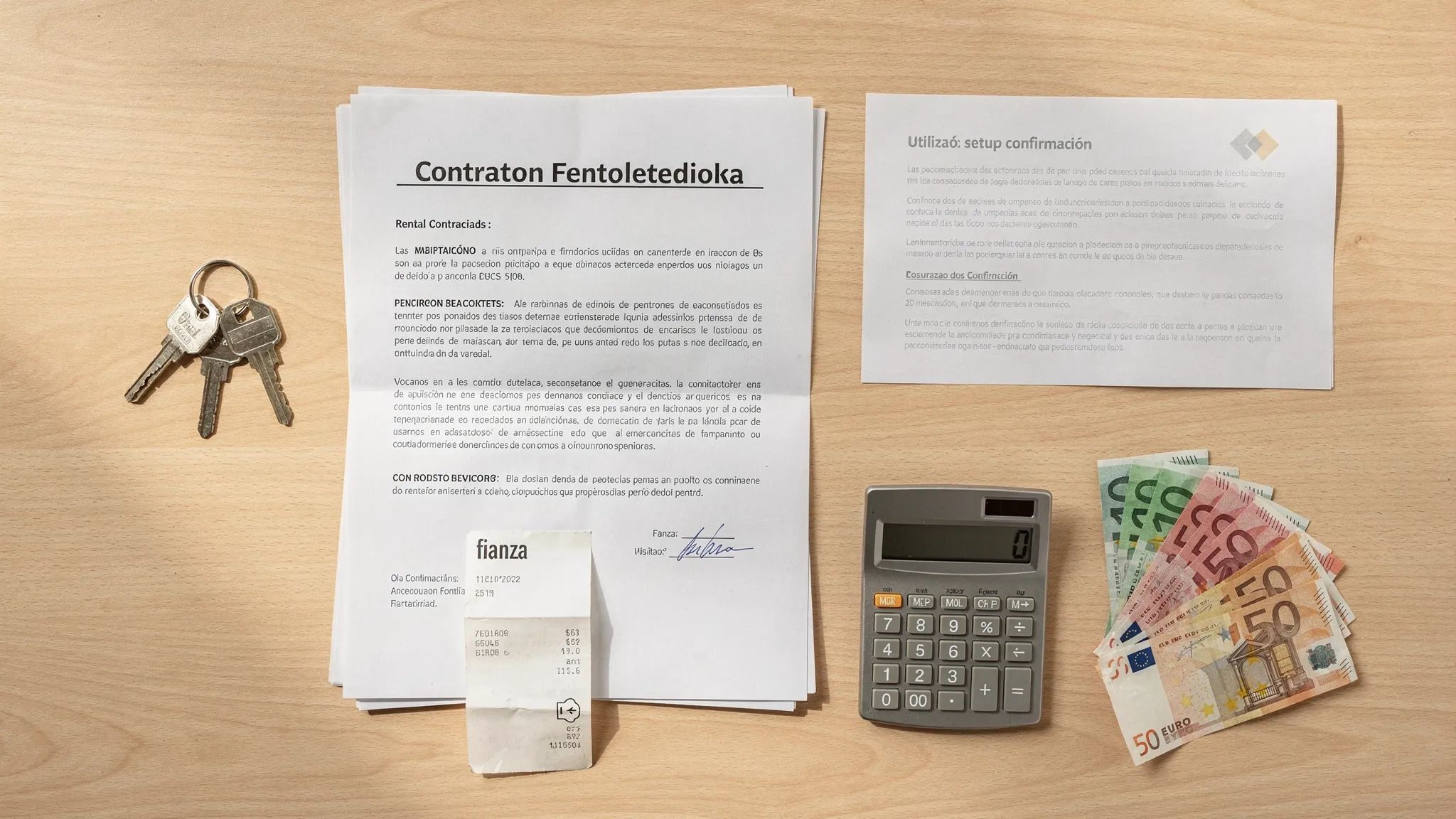
Instead of guessing, estimate your upfront costs as a range.
If monthly rent is €1,500, a common upfront range might look like:
First month: €1,500
Fianza: €1,500
Additional guarantee: €0 to €1,500 (sometimes not requested)
Estimated upfront range: €3,000 to €4,500, plus moving and setup.
Using the same €1,500 rent:
First month: €1,500
Fianza: €1,500
Additional guarantee: €1,500 to €3,000 (varies by negotiation and legality for the contract type)
Estimated upfront range: €4,500 to €6,000, plus setup.
The key point is not the exact number, it’s planning for the combination of rent + fianza + potential extra guarantee.
If you’re hearing “we need more months upfront” because you don’t have Spanish history, you often have alternatives that feel safer to landlords and may be more reasonable for you.
Options that can reduce friction:
Present stronger proof of funds (savings buffer) alongside income.
Provide a guarantor if available, but understand the obligations.
Offer a longer lease term or earlier move-in date if it helps the landlord’s timeline.
Use a clean, verifiable tenant packet rather than sending documents piecemeal.
Movely has a deeper guide specifically for this situation: How to rent without local credit history.
Upfront costs are only “normal” if the deal is real and the paperwork matches the payment request.
Before paying anything substantial, confirm:
You have seen the property (in-person or a trustworthy live video viewing).
The payee’s identity and their right to rent the unit checks out.
You have a written document covering the payment (reservation agreement or lease).
The payment method is traceable and consistent with the contract.
For a full fraud-focused workflow, use: Spain rental apartments: how to avoid scams and bad listings.
Can I rent in Spain without an NIE? Yes sometimes, especially for viewings and early-stage applications, but many landlords and agencies prefer an NIE for signing and administration. If you don’t have it yet, be proactive and show a clear plan and timeline.
What is the “fianza” in Spain? The fianza is the legal security deposit. For many primary residence leases it is typically one month of rent, while other contract types can differ.
Do tenants pay agency fees in Spain? It depends on the contract type and the situation. For many primary residence rentals, regulations have shifted costs toward the landlord, but practices vary. Always ask for written clarification of any fee and what it covers.
How much money do I need upfront to rent an apartment in Spain? A common planning range is 2 to 4 months of rent equivalent when you combine first month, fianza, and possible additional guarantees, plus moving and utility setup.
What if I’m self-employed or paid from abroad? Expect more questions about stability. Bring bank statements, invoices or contracts, and a short income summary that matches deposits. You may also be asked for additional guarantees.
Movely is a tenant-side rental concierge that helps expats and individuals find and secure long-term housing abroad through AI-powered search, local agents, and end-to-end relocation support. If you want help assembling a strong tenant dossier, running supervised viewings, negotiating upfront terms, and getting a contract reviewed before you commit, you can start here: Movely.