May 9, 2026

Apartment Finding Service: What’s Included and What’s Not
Apartment finding service guide: learn what is included, what costs extra, and how expats can choose safer tenant-side support.
Struggling to find the perfect home? Explore Movely services that can help you!

Landlords ask for extra financial backing at the exact moment you’re trying to move fast, secure a place remotely, or start a new job in a new city. That’s why the terms “guarantor” and “co-signer” come up so often in rental applications, and why mixing them up can create real risk for both you and the person helping you.
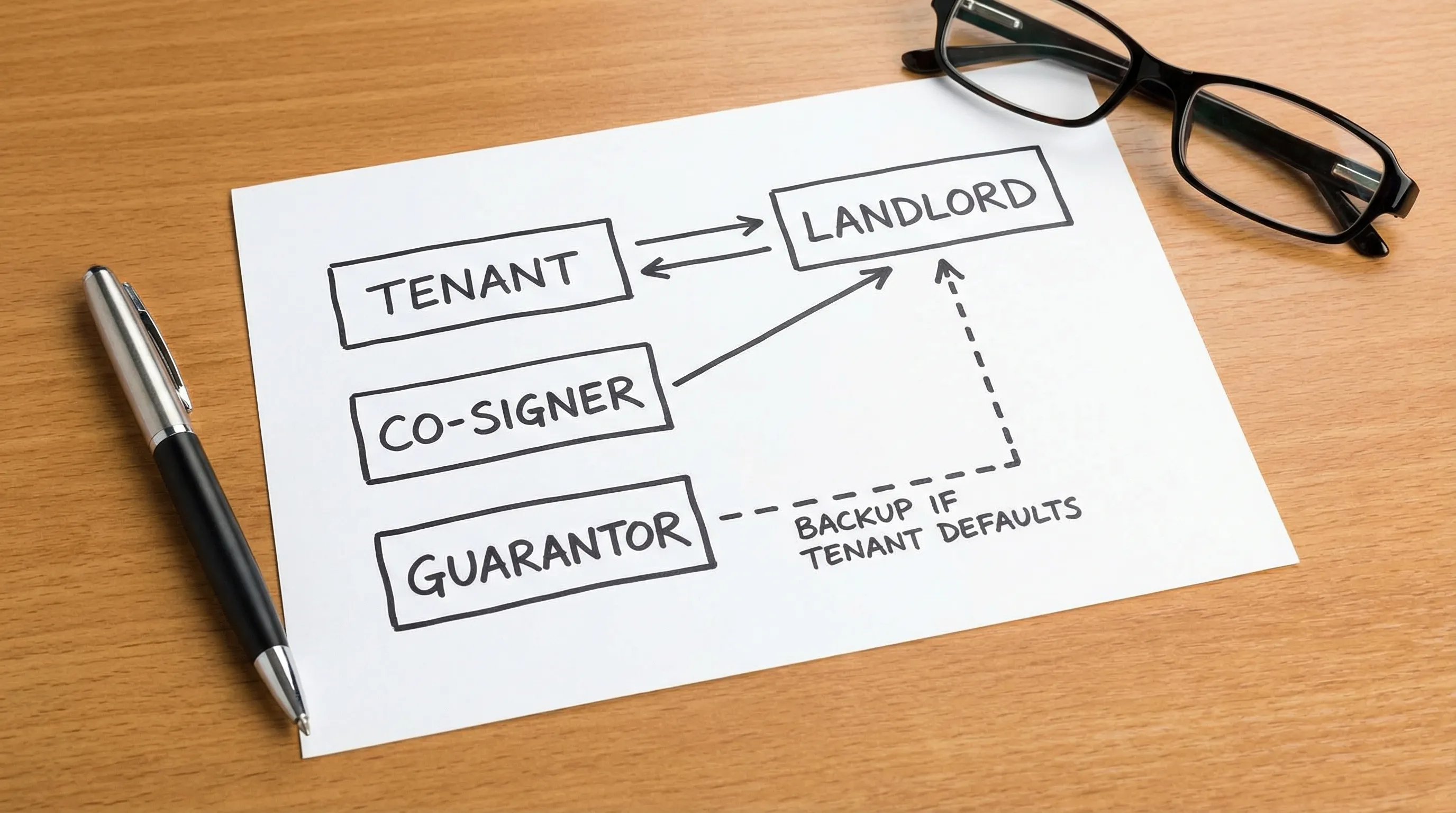
In plain English: both are ways to reduce a landlord’s risk, but they can differ in when responsibility kicks in, how the lease is signed, and what the backup person is agreeing to.
A useful rule of thumb is:
In practice, the exact difference depends on your lease language and state law. Some landlords (and even some application portals) use the terms interchangeably. So the safest approach is to ignore the label and focus on the contract: what obligations are being guaranteed, whether liability is “joint and several,” and how long the obligation lasts.
A guarantor is usually someone who:
Depending on the wording, a guarantor’s responsibility may begin only after the tenant fails to pay, or it may allow the landlord to pursue the guarantor immediately when rent is late. Many guaranties are written to be very landlord-friendly.
A co-signer is usually someone who:
If the lease says the tenants are jointly and severally liable, the landlord can legally pursue either signer for the full amount owed, not just “their share.”
Whether someone is a guarantor or co-signer, the key question is: responsible for what, exactly? Many renters assume it’s “just the monthly rent.” Often it is broader.
Common lease obligations that can be included:
If your supporter is uncomfortable with open-ended risk, ask the landlord whether they will accept a limited guaranty, such as a cap (for example, up to X months of rent) or a time limit (for example, the first 12 months only). Some landlords will negotiate this, many will not, but it’s worth asking before anyone signs.
Landlords care less about the label and more about how confident they feel that rent will be paid on time.
A landlord is more likely to request a guarantor or co-signer when:
Guarantors are common when the applicant is otherwise qualified (good references, stable situation) but has a thin or non-traditional financial profile, for example a student, a new immigrant, or a first-time renter.
Co-signers are common when the landlord wants another primary obligor on the lease, especially if:
Most landlords screen guarantors and co-signers almost the same way they screen tenants, sometimes more strictly.
They may request:
It’s also common for landlords to require a higher income multiple for the guarantor (for example, requiring the guarantor to earn several times the monthly rent). The exact threshold varies by market and landlord.
If you want a deeper walkthrough of what’s typically reviewed, see Movely’s guide on how to pass a tenant screening.
The “right” option depends on how quickly you need approval, what your supporter is comfortable with, and how the lease is written.
A guarantor or co-signer can:
It can:
It can:
The risk is real:
If someone is hesitant, that’s a signal to slow down and read every page carefully, especially the clauses about default, fees, attorney costs, and renewal.
Here are common scenarios where one structure tends to fit better.
A guarantor arrangement is often cleaner. It keeps the supporter off the main lease as an occupant while still giving the landlord payment assurance.
Use co-tenants (both signers as leaseholders). In everyday conversation, people call this “co-signing,” but functionally you are both tenants.
Still possible, but only if the landlord accepts it. Ask for:
These are negotiation points, not guarantees.
Even in competitive markets, try to review the actual lease language before your guarantor or co-signer submits documents. A few clauses matter more than the rest.
If the co-signer is a leaseholder, check whether the lease states all tenants are jointly and severally liable. This usually means the landlord can pursue any signer for the full amount owed.
If it’s a guarantor, identify whether it covers:
Some guaranties require the landlord to attempt to collect from the tenant first. Many do not.
Does the guaranty automatically continue if you renew month-to-month or sign a renewal? If you want the guaranty to end with the initial term, that needs to be explicit.
For a broader walkthrough of lease clauses that affect risk and cost, Movely’s lease agreement basics is a helpful companion.

Not everyone has someone who can (or should) take on this responsibility. Depending on your location and landlord, you may have other options.
Relocation tip: if your housing timeline slips because you’re waiting on approvals, you may need a plan for your belongings. For longer gaps (or if you’re moving cross-country), options like premium shipping containers can be part of a temporary storage and staging strategy while you finalize a lease.
Use these questions to remove ambiguity and protect the person helping you.
A few preventable missteps cause most guarantor and co-signer conflicts.
First, don’t treat a guaranty as a formality. People often sign quickly to “help get approved,” then learn later that the guaranty included renewals, fees, and attorney costs.
Second, don’t assume the landlord’s terminology matches your understanding. You may hear “co-signer” but receive a guaranty document, or vice versa.
Third, don’t skip the exit plan. If you expect to renew, move out early, or transfer roommates, you need to know how that affects the guarantor or co-signer.
Is a guarantor the same as a co-signer on a lease? Not always. A co-signer usually signs the lease as a responsible party, while a guarantor often signs a separate guaranty. The actual difference depends on the contract language.
Does a guarantor have to live with you? Typically no. Guarantors are usually non-occupants who agree to pay if the tenant defaults, but landlord policies vary.
Can a landlord go after the guarantor immediately if rent is late? Sometimes yes. Many guaranty forms allow the landlord to pursue the guarantor without first exhausting collection attempts against the tenant. Read the “default” and “remedies” language.
Can a guarantor or co-signer be removed after you build rental history? Only if the landlord agrees in writing. Some landlords will release a guarantor after a set period of on-time payments, others will not.
What should a guarantor or co-signer review before signing? The full lease (not just the signature page), the guaranty scope (rent only vs rent plus fees and damages), renewal language, and any joint-and-several liability clause.
If you have roommates, does the guarantor cover everyone’s rent? Often yes, if the lease makes tenants jointly responsible and the guaranty covers the lease obligations. That’s why it’s important to confirm whether the guaranty is limited to one tenant’s share or applies to the entire lease.
If you’re relocating, time pressure can push you into fast decisions that have long financial tails. Before you ask someone to guarantee your lease, tighten your application and reduce surprises.
Start with Movely’s practical guides on passing tenant screening and understanding key lease clauses, then confirm in writing exactly what your landlord means by “guarantor” or “co-signer.”